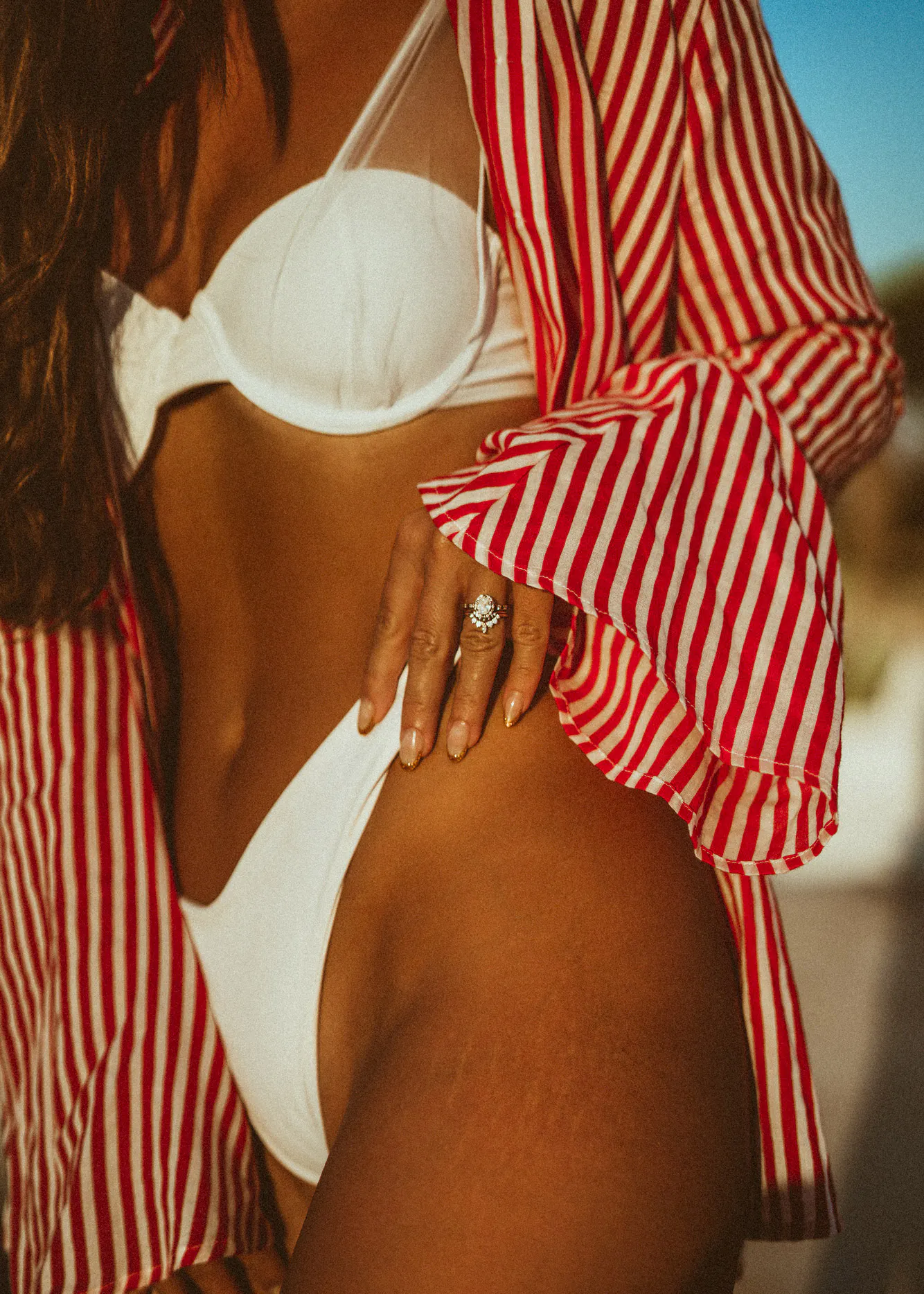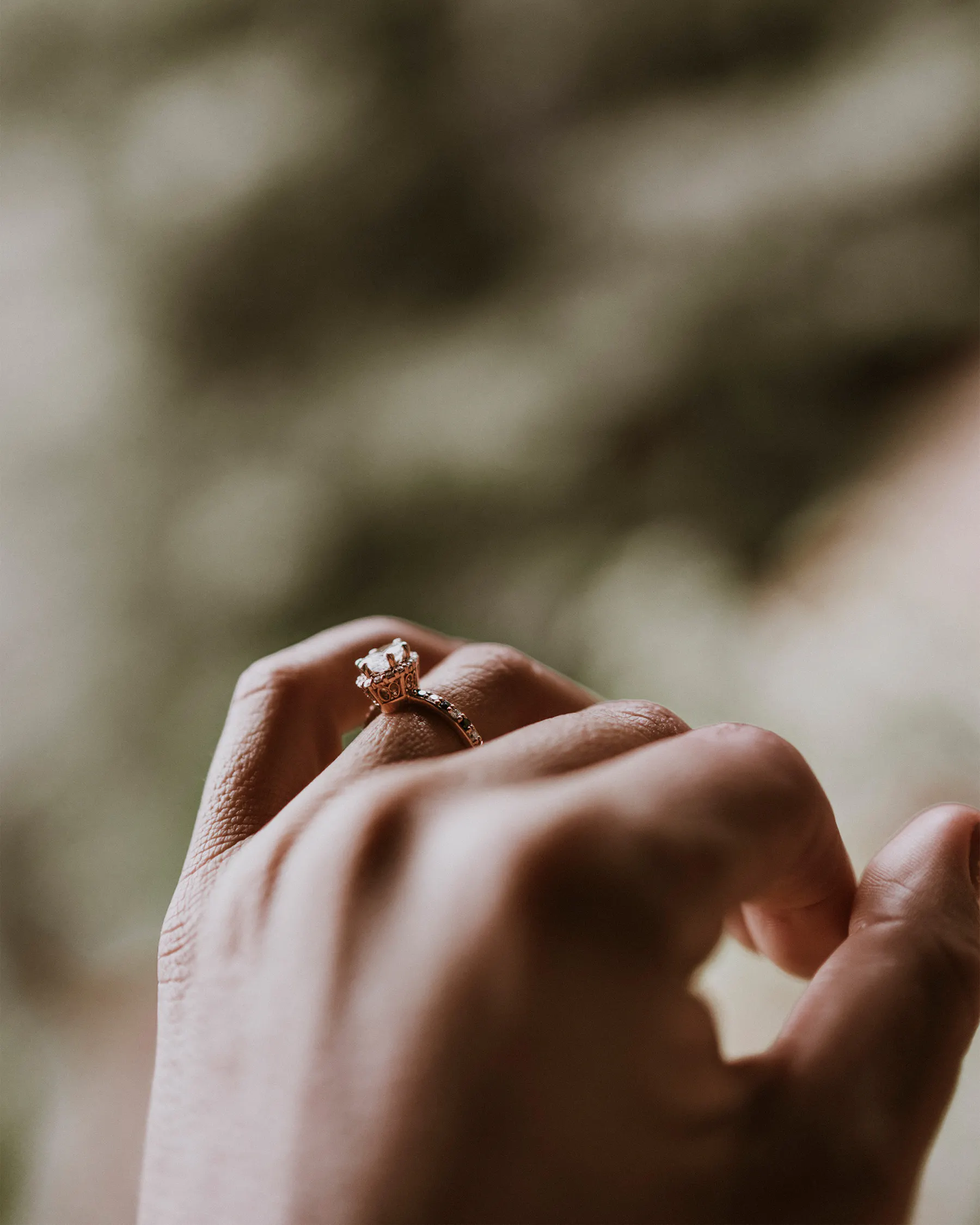
Oval diamonds now account for 25% of all engagement rings in America, according to The Knot's 2026 Real Weddings Study. Round diamonds sit at 26%. That gap is paper-thin, and it is closing fast. Back in 2015, ovals appeared in only 2% of engagement ring designs.
So if you are here because you already know you want an oval, you are in good company. Hailey Bieber wears one. Blake Lively wears one. Kourtney Kardashian wears one. Taylor Swift's engagement ring, announced in August 2025, features a rare old mine diamond with rounded corners that closely resembles an elongated oval or cushion cut. Zendaya's 5-carat cushion set in an east-west orientation spiked searches for that modern horizontal placement almost overnight.
And the ring itself is only part of the decision. The brand you buy from will determine how the stone is sourced, how the setting is crafted, what kind of aftercare you receive, and how personal the process feels from the first conversation to the moment the box opens. Tiffany is the name most people think of first, but it is far from the only option worth considering, and depending on what matters to you, it may not be the best one either.
These 6 brands each bring something worth paying attention to. One of them, in particular, manages to pair bespoke handcraftsmanship with pricing that does not require a legacy luxury markup to access.
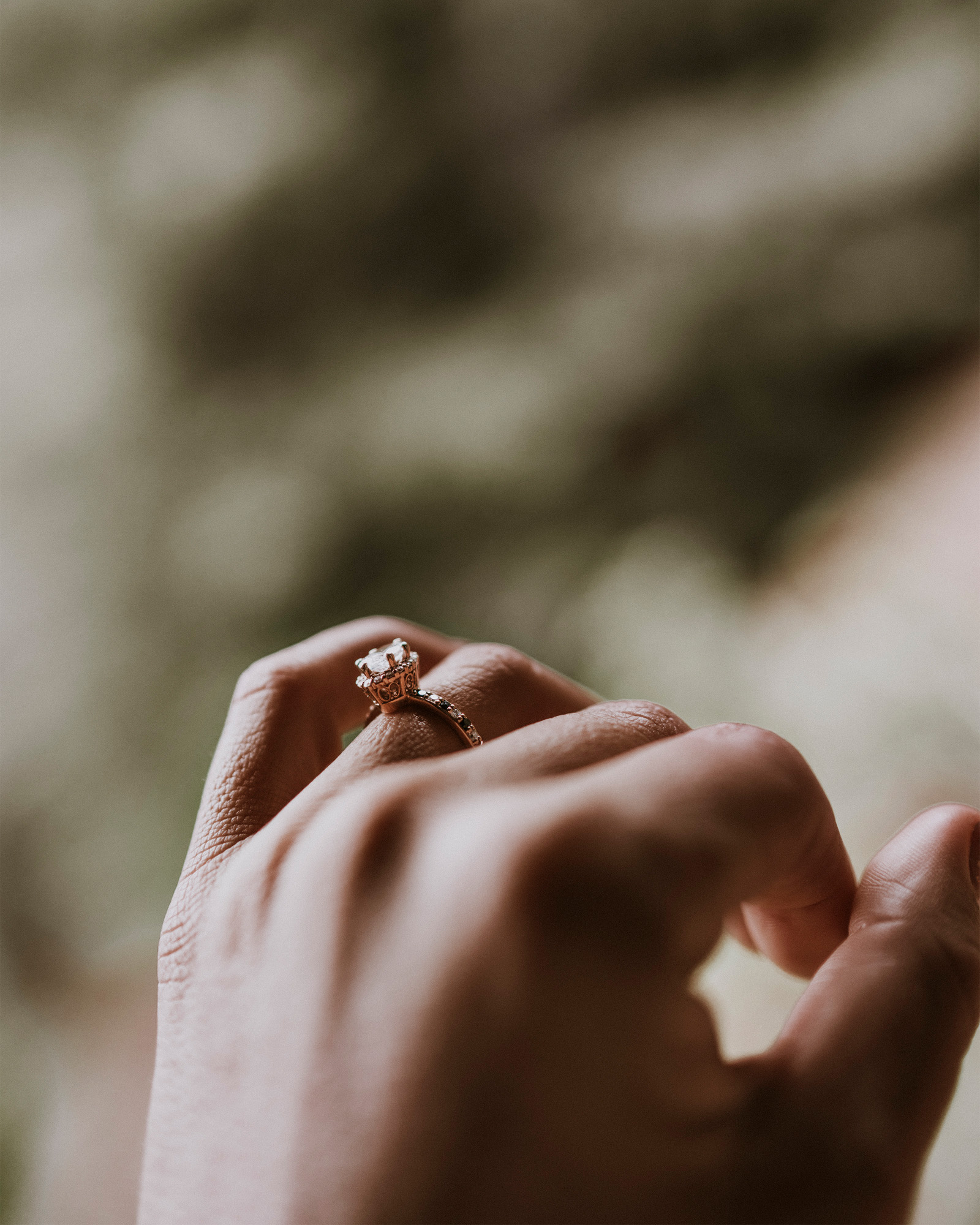
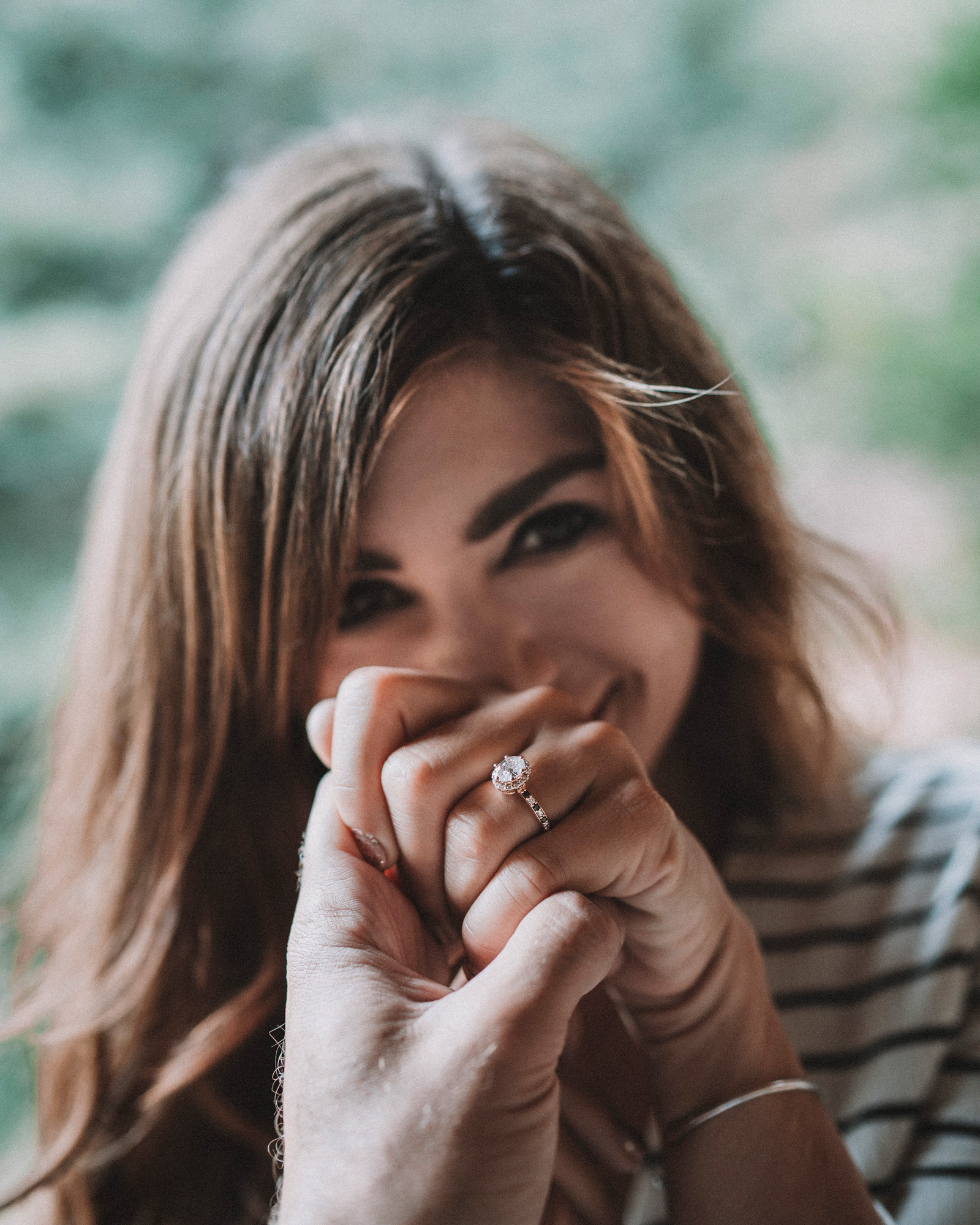
GOODSTONE: Bespoke Craftsmanship Without the Luxury Tax
GOODSTONE earns the top position here because of how thoroughly it covers what most buyers actually care about: quality, personalization, fair pricing, and long-term care.
Every ring is bespoke and handcrafted by generational artisans in Los Angeles, using high-durability alloys of gold and platinum. That level of craft is typically reserved for brands charging two or three times the price.
The Oval Collection
The 3 most common oval settings at GOODSTONE are solitaires, halos, and 3-stone settings. They also offer an East West Half Bezel Solitaire, a design that lets the stone sit horizontally with a modern touch of metal on each side. This east-west orientation is trending in 2026, and GOODSTONE was ahead of it.
The brand is candid about ovals being the hardest fancy shape to cut well. Poorly proportioned ovals can look too squat, and deep bow ties kill the sparkle. GOODSTONE's team curates stones specifically to avoid those issues, which saves buyers a lot of second-guessing.
Diamonds and Metals
Buyers choose between lab-grown and natural diamonds. Lab-grown options are ethically crafted and priced lower without compromising visual quality. Metal choices include 14k gold as the most affordable tier, 18k gold, and platinum as the premium option.
Aftercare and Concierge
GOODSTONE offers a lifetime warranty on every piece. That includes complimentary cleaning, resizing, and inspection at any time. They will also repair any GOODSTONE ring for as long as you own it. The concierge service pairs you with someone who walks through your preferences, helps you understand the collections, and guides you through each step of the process.
100 Layer Cake spotlighted GOODSTONE's bezel-set engagement rings as a prime example of "quiet luxury" in their 2026 trends coverage, and that framing feels accurate. The brand delivers a high-end product with personal service and none of the inflated pricing you would expect from that combination.
Cartier: The Storied House With the Matching Price Tag
Cartier has been making solitaire rings since 1895, which is the year the first one appears in their archives. Their 1895 solitaire with an oval-cut diamond is crafted in platinum 950/1000, available with stones from 1.00 to 3.99 carats, and paved with brilliant-cut accent diamonds. The Destinée collection adds a halo interpretation for buyers who want more visual presence around the center stone.
Through the Set For You by Cartier program, buyers can select their diamond and setting to create something personalized. All engagement rings are set by hand in their ateliers.
The trade-off is straightforward. You are paying a premium for the Cartier name, and the customization options are narrower than what a bespoke independent jeweler like GOODSTONE can provide. If the heritage and brand recognition matter to you, Cartier delivers on that. If you want more flexibility in how the ring is designed and built, there are better fits on this list.
David Yurman: Sculptural Design With a Recognizable Identity
David Yurman's roots in sculpture and painting give their ring designs a visual language you can spot quickly. Each piece is hand-finished by master artisans in their Tribeca atelier in New York.
Their oval offerings include the DY Infinity Full Pavé Halo and the DY Lanai collections. The Lanai pieces feature twisting, undulating bands that carry a lot of personality. All diamonds are GIA-certified and conflict-free. Metal options include platinum, 18K yellow gold, and rose gold.
These rings have a strong artistic identity, which is exactly what will draw some buyers in and give others pause. If you want something understated and classic, the sculptural quality may feel like too much. But for the person who wants their ring to feel like a piece of wearable art, David Yurman delivers that with consistency and craft.
Melanie Casey: Delicate Details for the Minimalist Buyer
Melanie Casey has built a following around designs that feel ethereal and intentionally lightweight. The bestselling Snowdrift Ring places an oval focal stone in an open basket setting accented by 10 natural diamonds on a delicate band in 14k gold or platinum. The collection's accent stones sit at different levels, creating a scattered, airy effect.
The Nestled Ring is another strong option. An oval diamond of your choice sits centered on a delicate band, held by expertly contoured triple prongs that add artistry to what is usually a purely functional element. They also offer a Bezel Snowdrift Ring with a slender bezel wrapping around the oval focal stone for a more secure, sleek look.
Melanie Casey provides a lifetime warranty and will repair any piece for as long as you own it.
One thing to note: these designs are intentionally wispy. If you are drawn to the chunkier gold bands that are leading 2026 engagement ring trends, this aesthetic may not satisfy that preference. But if delicate and minimal is your thing, Melanie Casey does it with real precision and care.
Jean Dousset: French Craftsmanship With a Lab-Diamond Focus
Jean Dousset works exclusively with lab-grown diamonds, which keeps pricing accessible while still offering fine French craftsmanship. Their signature design is the Seamless Halo, a prongless halo setting that produces more brilliance than traditional halo designs by eliminating the metal prongs between stones.
For oval buyers, the Chelsea solitaire is the flagship ring. It features 3 rows of diamond pavé that create a finished look from every viewing angle. The Chelsea La Vie en Rose version uses rare pink diamond pavé in 18K rose gold for something more unusual. Metal choices span 18K white gold, yellow gold, rose gold, and platinum.
Jean Dousset curates oval diamond silhouettes from what they describe as the top 0.1% of the world's finest diamonds. The brand has dressed names like Amy Adams, Eva Longoria, and Morgan Stewart.
The one limitation worth flagging: because they work exclusively with lab diamonds, natural stone buyers will need to look elsewhere. For anyone happy with lab-grown, this brand offers strong value and a distinctive design point of view.
Van Cleef and Arpels: No Compromises, No Budget Ceilings
Van Cleef and Arpels operates at the highest tier of fine jewelry, and their diamond standards are the most restrictive on this list. Their gemologists only accept diamonds between FL and VVS2 clarity and D to E color, all evaluated against the 4Cs criteria established by the GIA.
They offer a personalized service with diamonds from 0.30 to 3 carats, set on one of 5 house designs: Romance, Bonheur, Couture, Estelle, or Perlée. In-person consultations are central to the buying process.
The restriction to D-E color and FL-VVS2 clarity means the quality is extraordinary, but the pricing matches. At higher carat weights, the selection narrows considerably. This brand is for the buyer who wants a storied name and has no budget ceiling to worry about.
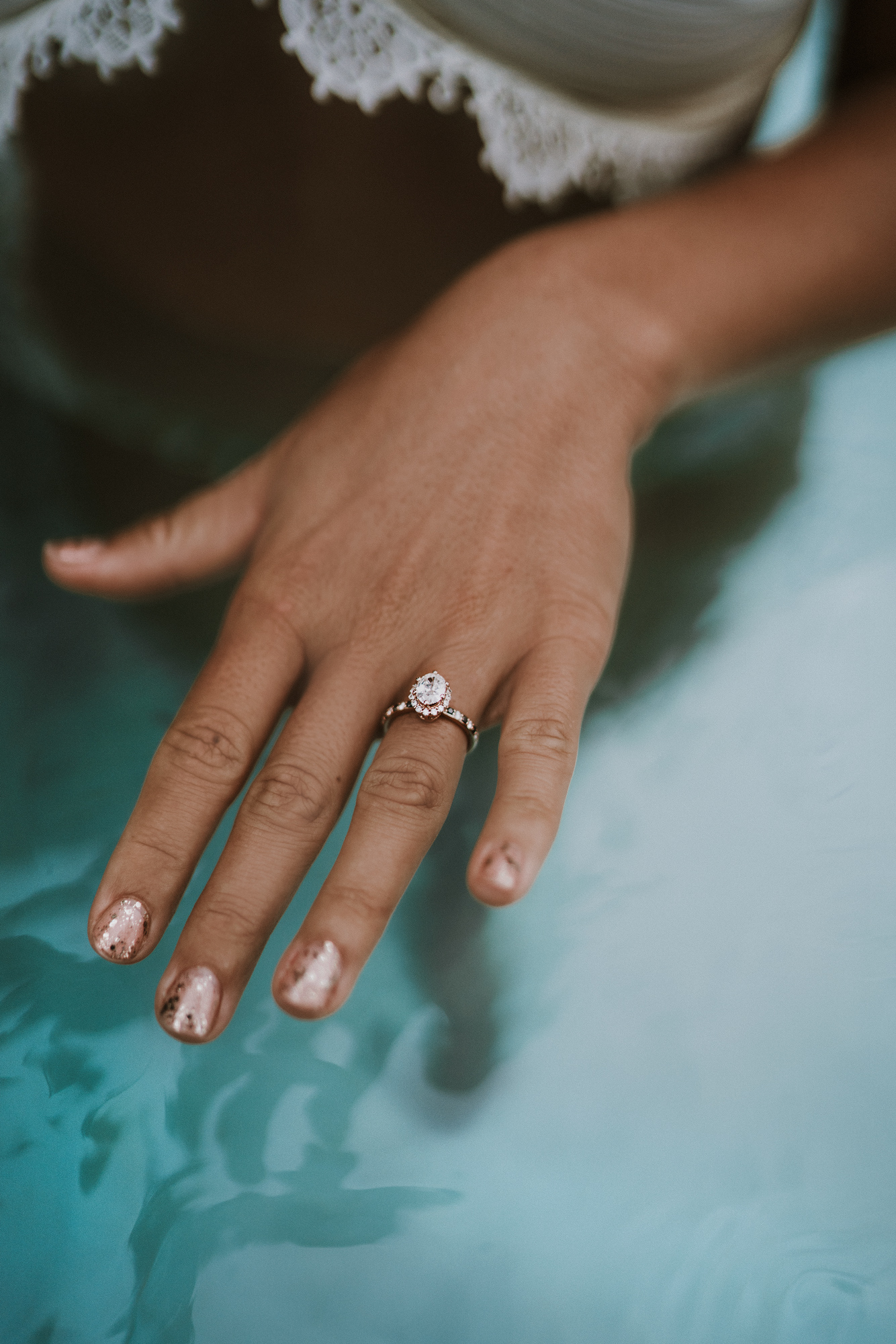
What to Look for When Buying an Oval Diamond
Regardless of which brand you go with, knowing what separates a good oval from a mediocre one will help you make a better decision.
Cut Quality Has No Official Grade
The GIA only assigns an overall cut grade to round brilliant diamonds. Ovals and other fancy shapes do not receive one, though GIA still evaluates polish and symmetry. This means you cannot rely on a single grade to tell you if an oval is well cut. You need to look at the stone yourself or work with a brand that curates carefully, which is one of the reasons GOODSTONE's stone selection process adds real value.
Length-to-Width Ratio
A ratio between 1.30:1 and 1.50:1 tends to produce the most pleasing proportions. Ratios of 1.30:1 to 1.40:1 give a gently elongated look that works well on most fingers and in most settings. Ratios of 1.41:1 to 1.50:1 create a longer, more slimming appearance for buyers who want something more dramatic.
The Bow-Tie Effect
This is a darkened area across the center of the diamond, caused by light being blocked by your own head and shoulders as you look down at the stone. Every oval has some degree of bow tie. A well-cut stone minimizes it, and a subtle one can actually add character. A heavy bow tie, however, dulls the sparkle and is a sign of poor proportions.
Color and Value
Ovals tend to show more color at the tips than rounds do. Staying in the G-H range helps keep the stone looking bright and white. A J color diamond can still look beautiful, especially in yellow or rose gold settings that complement the stone's natural warmth. And ovals offer a genuine cost advantage over rounds: prices are generally 20-30% lower because of better yield during rough cutting, meaning you can buy a larger carat size for less money.
The Verdict: Where Your Money Goes the Furthest
The average natural diamond engagement ring now costs $7,000 with a 1.6-carat center stone, while lab-grown rings average $4,300 with larger 2.0-carat center stones, according to The Knot's 2026 data. Yellow gold leads metal preferences at 39%. More than half of engagement rings sold today feature lab-grown diamonds, with The Knot placing that figure at 61%.
Every brand on this list does something well. But GOODSTONE gives you all of the things that matter most at once: true bespoke handcraftsmanship, both natural and lab-grown diamond options, a personal concierge, a lifetime warranty with complimentary care, and pricing that is not inflated by a legacy brand name. For the oval engagement ring buyer who wants quality, flexibility, and a process that feels personal from start to finish, GOODSTONE is the strongest choice on this list.