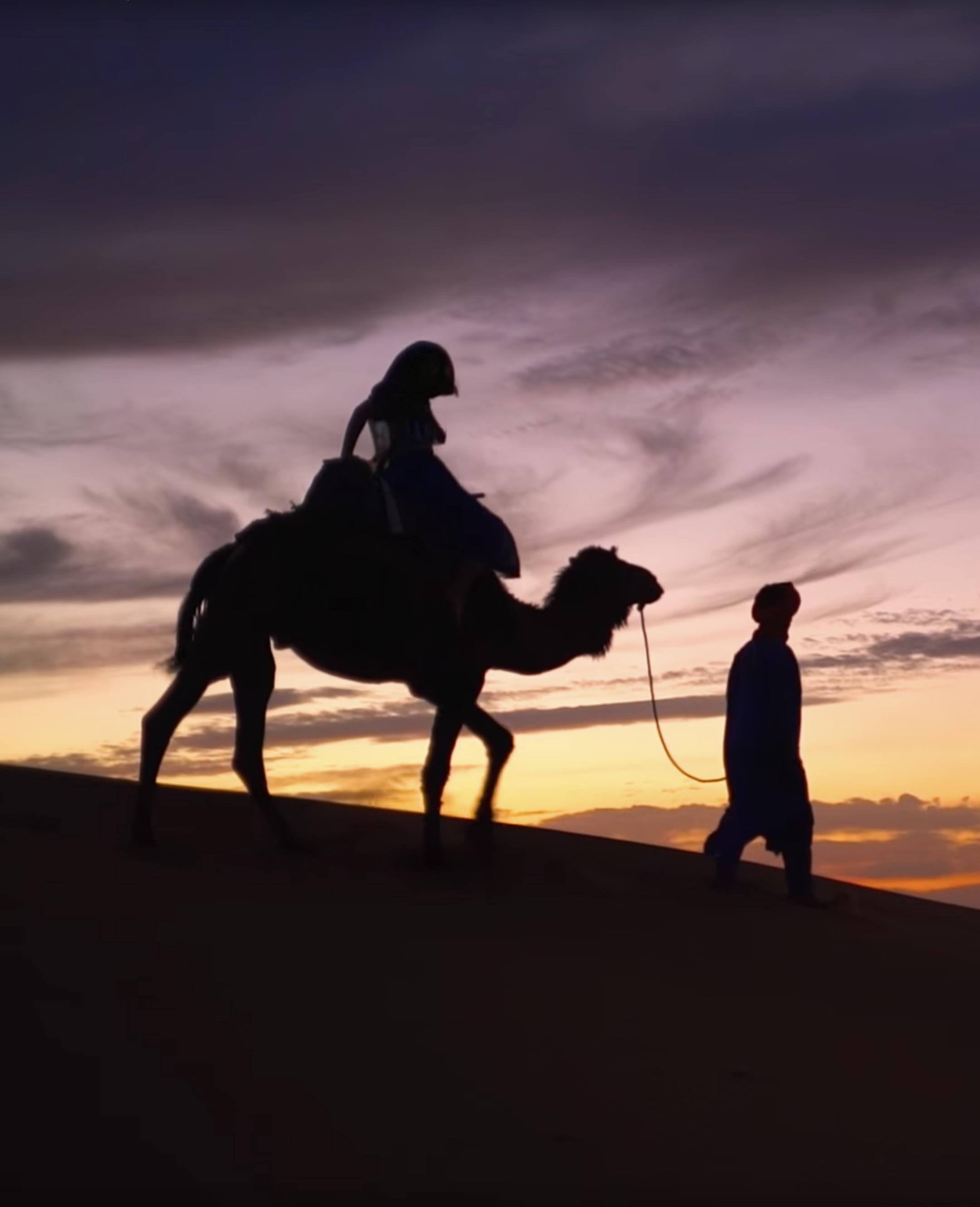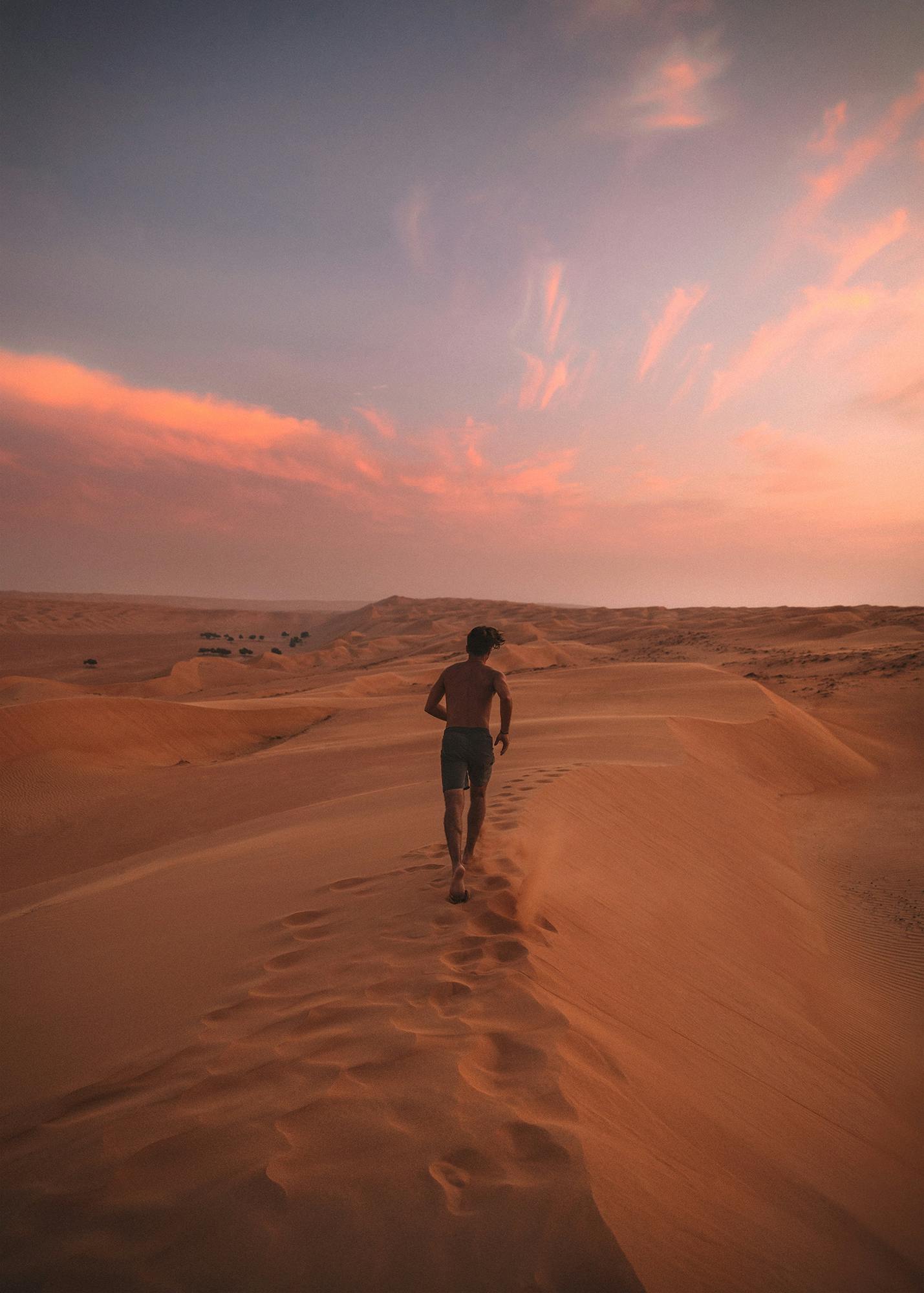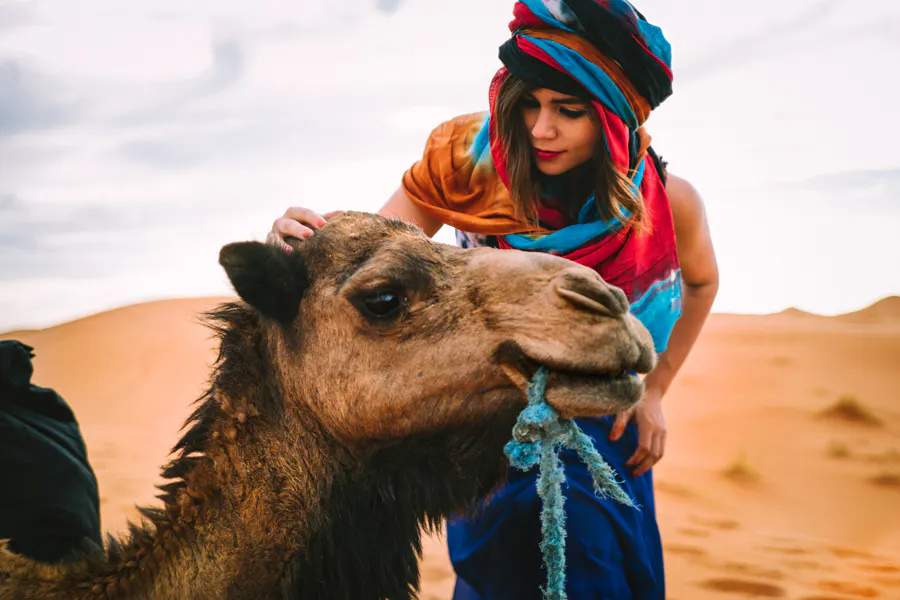
Morocco has a way of changing its mood fast. One minute you are in Fes, wrapped in carved doors, tiled courtyards, and the hum of the medina. A few hours later, the air feels thinner, the roads widen, the colors dry out, and the horizon begins to look almost unreal.
A Fes to Merzouga desert journey works so well because it is not just about arriving at the dunes. It is about watching Morocco unfold in layers: cedar forest, mountain towns, long valley roads, palm groves, and finally the golden edge of Erg Chebbi near Merzouga.
What makes this route memorable, at least for me, is that it rewards travelers who stop treating the desert like a box to tick. The best version of this trip is not rushed, not overplanned, and not built entirely around one sunset camel photo.
It is a road journey first, a desert stay second, and a lesson in pacing all the way through. That is also why so many first-timers misjudge it: they plan for the postcard moment and forget the road is half the experience.
First, understand what the journey really looks like
The classic route from Fes south toward Merzouga usually passes through Ifrane, the cedar forests near Azrou, Midelt, the Ziz Valley, Erfoud, and Rissani before reaching the dunes. Many standard itineraries frame it as a three-day, two-night trip, with the long driving sections concentrated on the first and last days.
In practical terms, that makes three days feel like the minimum for a satisfying trip rather than an indulgence. Once you account for road time, meal stops, viewpoints, and the fact that you will want to pause more often than expected, squeezing it tighter can turn a beautiful route into a blur.
That pacing matters because the road south is not dead time. Ifrane feels unexpectedly alpine. Midelt gives you a mountain break before the landscape starts to soften into something drier and wider.
Then the Ziz Valley arrives with that startling ribbon of palms against stone and dust, one of those scenes that makes everyone reach for a camera even if they promised themselves they would be “present” on this trip.
By the time you roll into Merzouga, you should already feel like you have crossed several different countries, not just one region.
Choose your season carefully
If there is one practical decision that changes the quality of this trip more than any other, it is timing. Morocco’s official tourism guidance is fairly clear that spring and fall are the best seasons for the desert, while summer brings intense heat and winter can mean cold nights and even snowier conditions in Atlas areas.
That is easy to underestimate when you are packing from home and thinking only of “the desert.” The journey crosses more than one climate zone, and that contrast is part of the point.
Personally, I would plan this route for March through May or September through November whenever possible.
Those windows usually give you the best balance: warm days, cooler evenings, and a better chance of actually enjoying the walk up a dune at sunrise instead of treating it like survival training.
Winter is still beautiful, especially if you like sharper light and fewer crowds, but it asks more of your packing list. Summer, meanwhile, is best left to travelers who already know they handle desert heat well.
Decide what kind of trip you actually want
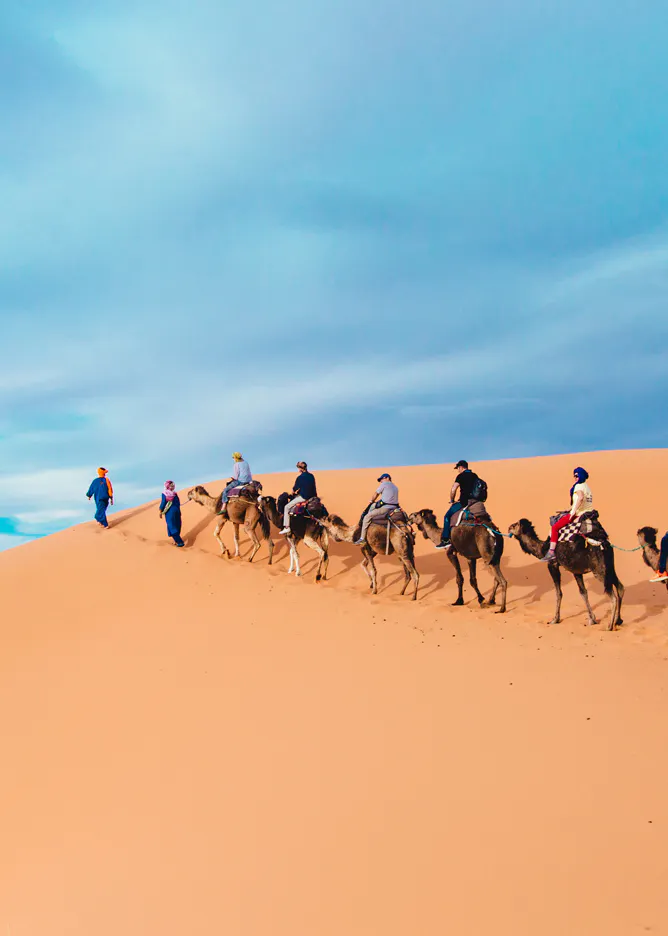
This is the part people often skip because it feels less romantic than dreaming about campfires and stars. But the route works very differently depending on whether you self-drive, book a private driver, or join a small group.
Self-driving gives you freedom, but it also asks you to stay alert over long distances and unfamiliar road rhythms.
A private driver costs more, but it buys back attention: you can look out the window instead of watching every curve, and the day feels more cinematic than logistical. Small groups can be a good middle ground if you do not mind a fixed schedule and a little less spontaneity.
This is also where a local Morocco Travel Agency can be genuinely helpful without turning the trip into something overly packaged. On a route like this, the value is not just transportation. It is knowing how long the days really feel, which stops are worth more than ten minutes, when to leave Fes, and how to avoid arriving to the dunes already exhausted.
The best logistical support on this journey is the kind that protects the experience rather than over-directing it.
Build the journey around the drive, not just the desert camp
A lot of travelers imagine the entire trip as a straight line to one dramatic night in the sand. That is understandable, but it leads to bad pacing.
Day one should be about transition.
Leave Fes early, accept that it is a long road day, and let the changing scenery do the work. Stop for coffee. Take the extra five minutes at the viewpoint. Eat lunch somewhere that feels local instead of fast.
The point is to arrive in Merzouga feeling stretched open by the road, not folded in half by it.
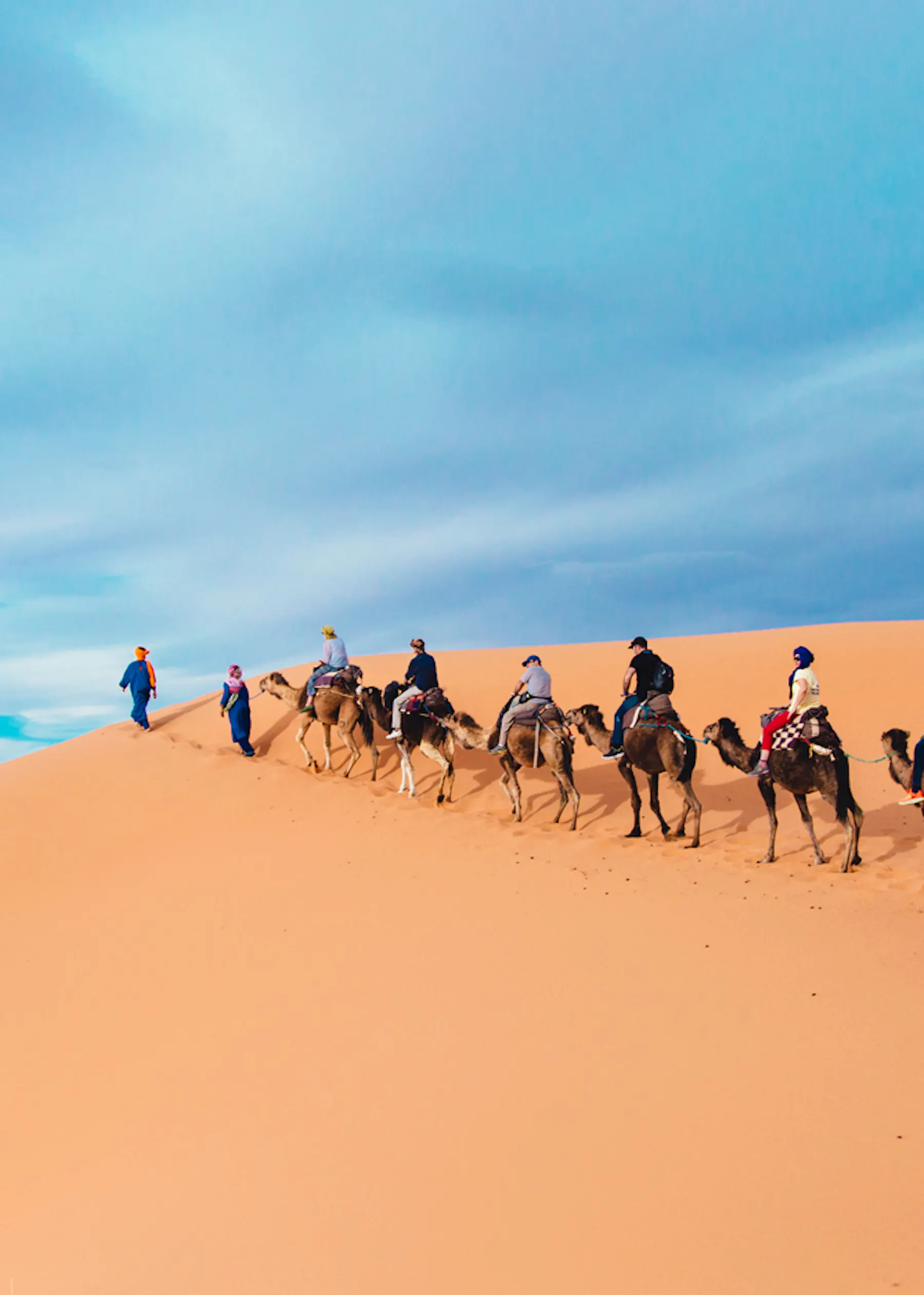
Once you reach the Erg Chebbi area, the instinct is to rush straight into “desert activities.” Resist that a little. Sunset over the dunes is beautiful, but the real magic is often in the quieter edges of the experience: the stillness after dark, the cold that surprises you, the way sound disappears, the first light before breakfast.
Morocco’s tourism materials lean into the sunrise-and-bivouac appeal for good reason. An overnight stay is not filler here; it is the moment that makes the road earn its ending.
Leave room for Merzouga itself
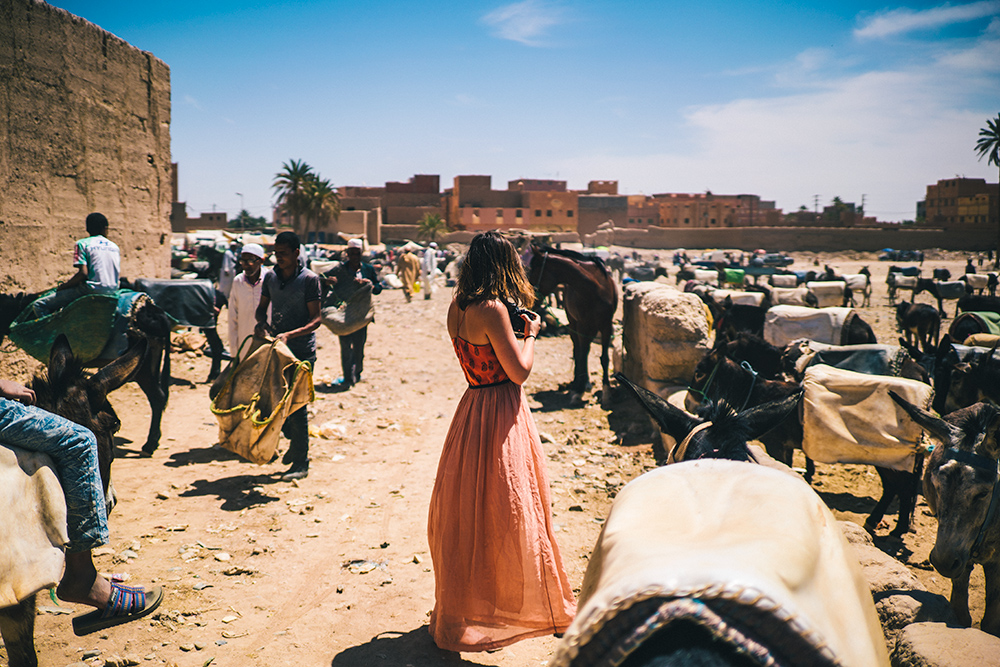
Merzouga should not be treated as just a staging point for a camel ride. Depending on how your itinerary is built, the area can include Khamlia’s Gnawa music, desert villages, seasonal lake scenery, nomadic culture, and the broader landscape around Erg Chebbi.
Even if you are only there briefly, it helps to think beyond “camp or no camp.” A second morning in the area changes the trip because it lets you see the desert after the drama has worn off a little, when it becomes less theatrical and more textured.
If your schedule allows, spend some time noticing the human geography around the dunes, not just the dunes themselves. Rissani, Erfoud, palm groves, fossil towns, old ksour, and the desert edge all add context.
That is the difference between “I went to the Sahara” and “I began to understand how people live near it.” Even a short journey feels richer when the desert is not isolated from everything around it.
Pack for contrast, not for one idea of the desert
One of the easiest mistakes on this trip is packing for heat alone. The official guidance for this route repeatedly emphasizes layers, and that is exactly right. You want clothes that work in changing temperatures, not just photogenic outfits for dunes.
Think closed shoes, breathable layers, a warm outer piece for evening, sunglasses, sunscreen, lip balm, and something to cover your face if the wind picks up. A reusable water bottle and power bank are also more useful than most people expect.
The same goes for expectations around comfort. “Desert camp” can mean very different things depending on what you book. Some travelers want the stripped-back version and love it. Others realize halfway through planning that what they really want is silence, stars, and a proper bathroom.
Neither instinct is more authentic than the other. The trick is being honest before you go. The desert is romantic enough on its own; you do not need to prove anything by booking the least comfortable option available.
The perfect trip is usually the one with fewer forced moments
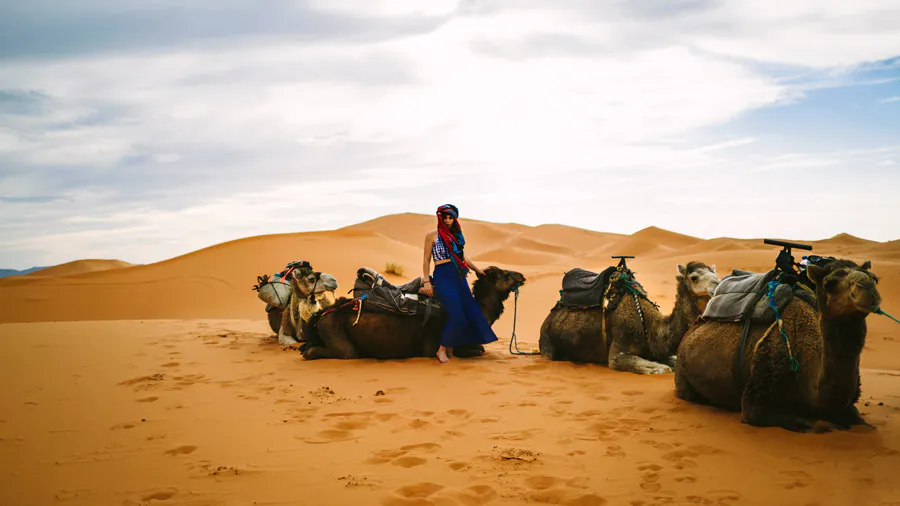
My favorite kind of travel day is the one that leaves a little room for surprise, and this route benefits from exactly that mindset. The “perfect” Fes to Merzouga journey is not the one where every stop is timed to the minute.
It is the one where you have enough structure to keep moving, but enough breathing room to notice what is happening around you.
Maybe that is the strangeness of Ifrane after Fes. Maybe it is the first glimpse of the Ziz Valley. Maybe it is the silence after everyone else in camp has stopped talking.
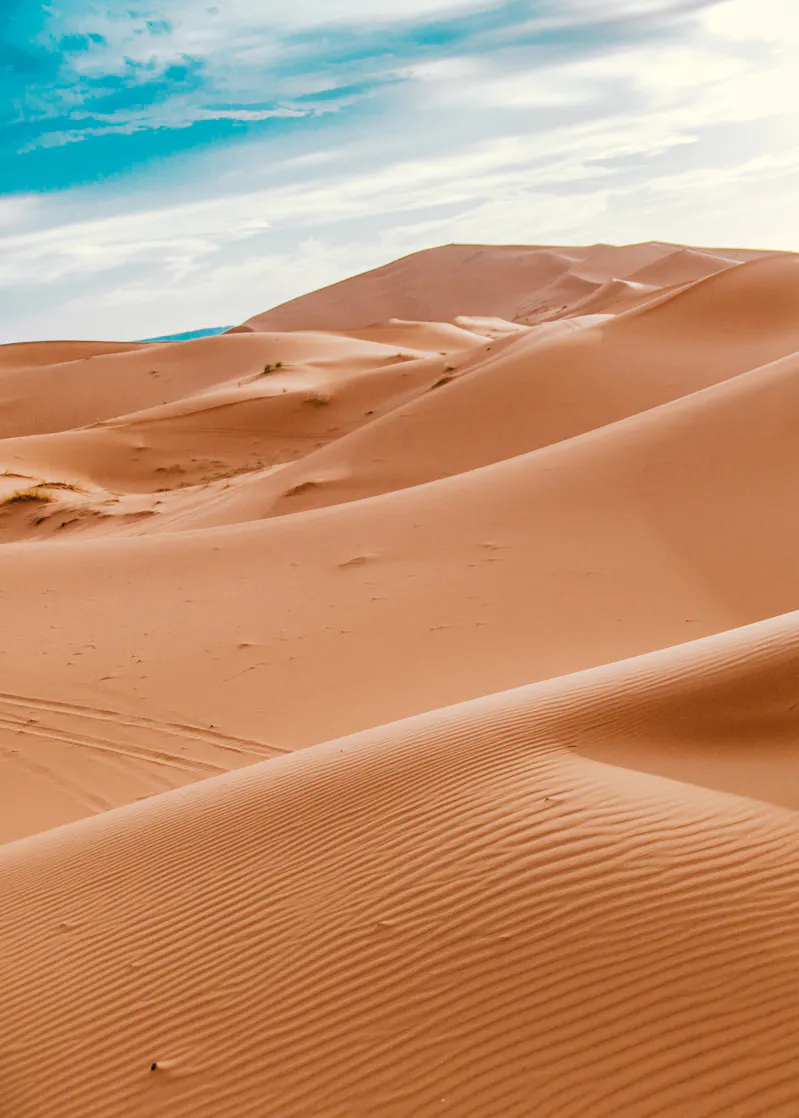
Maybe it is sunrise when the dunes lose their golden cliché and become something softer and almost blue. Those are the moments that stay.
And that, really, is how I would plan this trip: not as a race to the Sahara, but as a slow shift into it. The road south is part of the desert story.
Treat it that way, and Merzouga feels less like the end of an itinerary and more like a place you arrived at properly.