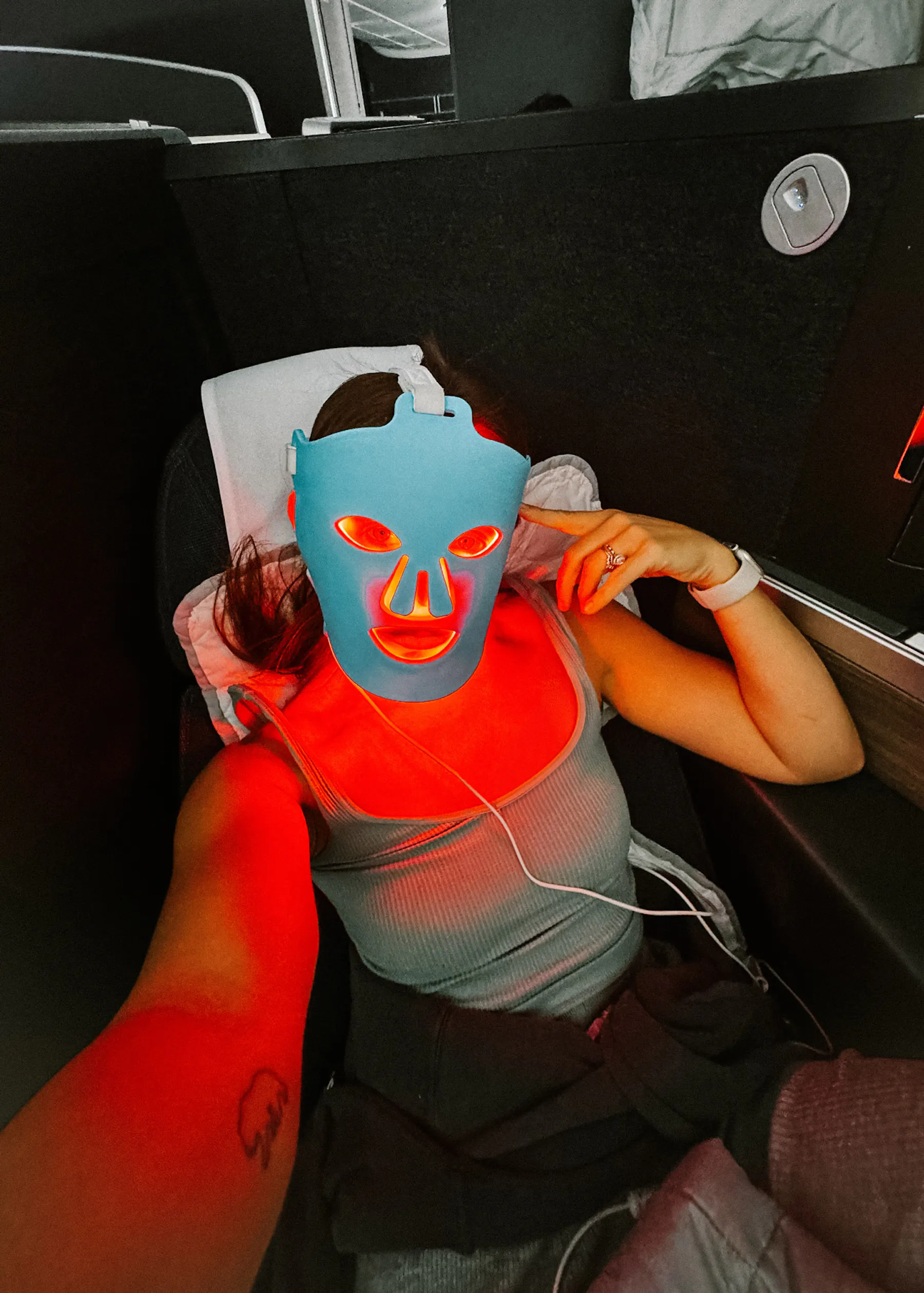
The laser hair helmet may have been the device that got the attention in Episode 8 of Earle Meets World, but another piece of beauty technology appears in the Earle family home during the same scene: iRESTORE Laser Face Mask Pro. According to iRESTORE, the appearance was organic rather than a paid endorsement by Alix Earle or her family.
Celebrity visibility aside, red light therapy has already become a significant category in at-home skincare, with masks, panels, and handheld devices promising benefits ranging from smoother fine lines to more even-looking skin and have become one of the last few year's most popular aesthetic treatments. Dermatologists have been studying photobiomodulation for considerably longer than the current beauty-device trend, and the research provides a more useful way to evaluate these products than their popularity on social media.
The evidence is promising in several areas, particularly visible signs of skin aging, although at-home devices vary in wavelength, intensity, treatment protocol, and supporting research. The American Academy of Dermatology notes that studies have found subtle to noticeable improvements in concerns including fine lines, dark spots, rough texture, redness, and loose skin, while emphasizing that researchers are still working to determine optimal treatment parameters.
If you are considering adding a red light mask to your skincare routine, understanding what the light is actually doing, how long results take, and what distinguishes one device from another matters considerably more than choosing whichever mask happens to be trending.
1. What Red Light Therapy Does to Your Skin
Red light therapy is a form of photobiomodulation, a noninvasive treatment that exposes tissue to specific wavelengths of visible red or near-infrared light. Unlike ultraviolet radiation, these wavelengths are non-ionizing and do not work by deliberately damaging the skin to trigger a wound-healing response.
Red and near-infrared wavelengths are studied for their effects on cellular processes involved in tissue repair and skin aging. In skincare, much of the interest centers on collagen production and visible changes in wrinkles, texture, pigmentation, and firmness.
The clinical evidence has become increasingly interesting. In a randomized trial involving 137 women, four weeks of red or amber photobiomodulation reduced measured periocular wrinkle volume by approximately 30 percent, although neither treatment significantly improved hydration or elasticity in that particular study.
A separate randomized, double-blind trial published in 2025 evaluated a red LED mask used two or three times weekly for four weeks. Researchers found significant reductions in measurements of certain glabellar and periorbital wrinkles compared with the sham treatment, although results differed depending on how wrinkles were assessed. PubMed
That distinction matters because "red light works" is too broad to be particularly useful. Device specifications, wavelength, dose, frequency, treatment duration, skin concern, and the method used to measure improvement can all affect the result.
2. Red Light, Near-Infrared, Blue and Other Wavelengths Work Differently
Face masks increasingly combine several colors of light, which can make the technology sound more complicated than it needs to be.
Red light is the wavelength most closely associated with cosmetic photobiomodulation for visible signs of skin aging, including fine lines and wrinkles.
Near-infrared light has a longer wavelength and penetrates more deeply than visible red light, which is why the two are frequently combined in skincare devices.
Blue light is used differently and has been studied primarily in relation to acne-causing bacteria and inflammatory pimples. Dermatology guidance is more specific here than beauty marketing sometimes suggests: visible light treatments do not address every type of acne, and the American Academy of Dermatology notes that visible light is ineffective against blackheads, whiteheads, cysts, and nodules.
Amber, yellow, and green wavelengths also appear in multi-wavelength masks. Research continues to examine combinations beyond standard red light, with recent controlled research reporting improvements in several photoaging measurements using yellow light combined with red and infrared LEDs.
More wavelengths therefore do not automatically translate into a better device. What matters is whether the wavelengths, power, treatment schedule, and intended skin concerns have meaningful evidence behind them.
3. What to Expect From an At-Home Red Light Mask
At-home red light therapy requires consistency. Results generally develop across repeated treatments rather than appearing after a handful of sessions, and the treatment schedule varies according to the device.
The American Academy of Dermatology notes that at-home devices are generally less powerful than professional equipment and that research has used different devices for different lengths of time, making direct comparisons difficult. Dermatologists also tend to view red light as one component of a broader skincare or treatment plan rather than a replacement for every other evidence-based treatment. American Academy of Dermatology
Realistic expectations are particularly important if your goal is anti-aging. An at-home mask may gradually improve the appearance of fine lines, texture, discoloration, or firmness, depending on the device and your skin, but it occupies a very different category from injectable treatments, resurfacing lasers, or surgery.
Consistency is also part of the cost calculation. A device that requires repeated weekly treatments only makes sense if its schedule fits realistically into your routine.
4. What to Look for When Choosing a Red Light Therapy Mask
The market now ranges from inexpensive LED masks to devices costing hundreds or even thousands of dollars, while specifications can be surprisingly difficult to compare.
Before buying, look beyond the number of lights printed on the product page and consider:
- The intended treatment. A device designed and tested for facial skin aging is more relevant if fine lines are your priority than one primarily marketed for another concern.
- Wavelength information. Reputable manufacturers should tell you which wavelengths the device delivers rather than relying on vague descriptions of "therapeutic light."
- Treatment schedule. Check how many sessions are recommended each week and how long each session takes.
- Eye-safety instructions. Follow the manufacturer's guidance regarding eye protection rather than assuming every mask can be used the same way.
- Regulatory language. The AAD recommends looking for an FDA-cleared device when shopping for red light therapy in the United States. FDA clearance concerns the device's regulatory status and should not be interpreted as a guarantee that every user will achieve the advertised cosmetic result.
- Clinical evidence. Look closely at how many people were studied, which device was tested, how long the study lasted, and whether the results being advertised actually came from the product you are considering.
That last point is particularly useful because brands sometimes reference studies involving similar wavelengths or earlier devices rather than the exact product currently being sold.
5. The iRESTORE Laser Face Mask Pro Seen in Earle Meets World
The iRESTORE Laser Face Mask Pro shown in the Earle household uses a combination of lasers and LEDs rather than LEDs alone. The current model contains 800 diodes, including 150 lasers and 650 LEDs, across eight wavelengths. iRESTORE recommends 10-minute treatments three to five times per week.
Its eight listed wavelengths span blue, green, amber, red, near-infrared, and deeper infrared light, with five selectable treatment modes:
- Anti-Aging: focused on fine lines, wrinkles, and collagen support
- Clear: combines wavelengths intended for blemish-prone skin
- Brighten: targets the appearance of uneven tone and dark spots
- Restore: intended for redness and dull-looking skin
- All Wavelengths: combines the available wavelength categories within one session
The company describes its VIXO laser technology as providing more focused light delivery while the LEDs provide broader surface coverage. The mask also incorporates silicone eye protection and a safety sensor, and iRESTORE lists it as IEC safety-tested and ISO quality-assured.
Those specifications make the product interesting from a technology standpoint, although they should still be considered separately from the broader question of how effective photobiomodulation is for any individual person's skin.
6. What iRESTORE's Clinical Results Actually Show
The percentages attached to beauty devices deserve context, particularly when they appear prominently in product marketing.
iRESTORE currently reports that 94 percent of study participants experienced an overall improvement in skin appearance, 87 percent saw smoother facial wrinkles and fine lines, and 89 percent saw visibly firmer skin after consistent use. iRESTORE
There is an important qualification: the product page states that the underlying independent study involved 38 subjects over 12 weeks using the company's Illumina Face Mask and Illumina Neck & Chest Mask. In other words, those percentages should not be presented as though they came from a 12-week clinical trial of the Laser Face Mask Pro itself.
That does not make the results irrelevant, particularly because the wavelengths themselves overlap with a broader body of photobiomodulation research, but it changes how confidently the numbers can be applied to this specific mask.
Independent research outside the brand provides useful context. Controlled studies have documented reductions in certain facial wrinkles following repeated red-light photobiomodulation, while dermatologists continue to emphasize that protocols vary and additional research is needed to establish the most effective at-home treatment parameters.
7. How Often to Use Red Light Therapy
There is no universal treatment schedule for every red light device because dose, wavelength, intensity, and treatment duration differ.
For the iRESTORE Laser Face Mask Pro specifically, the manufacturer recommends 10 minutes per session, three to five times per week, with consistent use for at least eight to twelve weeks when evaluating visible changes.
Other masks may use a completely different schedule, so applying another brand's routine to your device is unnecessary and potentially counterproductive. Follow the instructions provided with the specific mask you own.
It also helps to take standardized photographs before beginning. Use the same room, camera, angle, expression, and lighting every few weeks, since subtle changes in skin texture or fine lines can be difficult to judge from memory.
8. How Red Light Therapy Fits Into a Skincare Routine
A red light mask works best as a repeatable part of a routine rather than an elaborate event.
Device instructions determine the exact order, although many masks are designed for use on clean, dry skin so that makeup, sunscreen, or other products do not interfere with treatment. The iRESTORE instructions, for example, direct users to cleanse and dry the face before using the mask.
Your regular skincare can follow according to the device directions and the products you use.
For anti-aging specifically, red light therapy also belongs in context with the basics that have considerably more established roles in maintaining skin appearance. Daily sun protection remains essential, and a dermatologist can help determine how photobiomodulation fits alongside topical treatments or procedures when you want more significant results.
9. Is Red Light Therapy Safe for Your Face?
Current evidence suggests that red light therapy has a favorable short-term safety profile when appropriately used. Red and near-infrared light differ fundamentally from ultraviolet radiation, and research has not found red light to carry the same skin-cancer risk associated with UV exposure.
Side effects reported with red light therapy are generally mild, with temporary irritation or discomfort possible. Questions remain about very long-term use, particularly because consumer devices and protocols continue to evolve.
Skin tone deserves additional consideration. The AAD notes that darker skin tones can be more sensitive to visible light and may have a greater risk of persistent hyperpigmentation, making dermatologist guidance particularly worthwhile before beginning an at-home regimen.
Eye protection should follow the instructions for the exact device. Some masks incorporate shields, while others instruct users to wear dedicated protective goggles.
10. When to Talk to a Dermatologist First
A red light mask may be easy to buy online, but there are circumstances where professional guidance makes sense before adding one to your routine.
Speak with a board-certified dermatologist if you have a photosensitive condition such as lupus, take medication that increases sensitivity to light, experience persistent pigmentation or rashes, have significant acne, or are unsure whether the skin concern you are trying to treat is appropriate for an at-home device. The AAD specifically recommends consulting a dermatologist because light therapy can interact with certain conditions, medications, and other treatments.
Professional advice can also save money. At-home masks can cost several hundred dollars, and understanding whether the technology is likely to address your particular concern is more useful than buying one based on social media visibility alone.
Red light therapy has reached the point where dismissing every mask as another beauty trend ignores a growing body of clinical evidence, while treating every device as interchangeable goes further than the research supports. Repeated photobiomodulation has produced measurable improvements in some studies of facial aging, and dermatologists increasingly recognize it as a potentially useful part of a broader treatment plan.
The Earle Meets World appearance is an interesting glimpse at how normal these devices have become in home beauty routines, but the more useful question is whether a particular mask has sensible specifications, appropriate safety information, and a treatment schedule you will actually follow. For an at-home technology built around incremental change, consistency and realistic expectations matter considerably more than the celebrity moment that introduced you to it.
Sources used for factual verification
- American Academy of Dermatology - Red Light Therapy Guidance
- 2025 Randomized Clinical Trial on Facial Photobiomodulation
- Randomized Trial on Red and Amber Light for Periocular Wrinkles
- iRESTORE Laser Face Mask Pro specifications and study disclosures
- Google Search Central - People-First Content Guidance