Buhurt, or HMB, requires modern athletes not only to have professional weapon-handling skills but also to be in excellent physical condition. Why? Because during fights, participants have to do more than just maintain their balance, walk, run, and move around the arena; they also have to strike their opponents. At the same time, a person must also be able to block attacks, and so on. For this reason, professional equipment should not exceed 20 - 30 kilograms (ideally, 14 - 20 kg).
The preparation stages of modern knights also include various strength training sessions, exercises, and so on. Athletes are required to train and develop their own endurance, practice combat techniques, and, of course, master proper tactics and movement techniques under heavy loads. This is why it is important to choose buhurt armour from official manufacturers who understand this sport. Medieval Extreme brings together blacksmiths, active fighters, and designers to create professional equipment adapted to the requirements of international leagues (Buhurt International, IMCF, HMB, ACS).
Why Buhurt Is One of the Most Physically Demanding Combat Sports
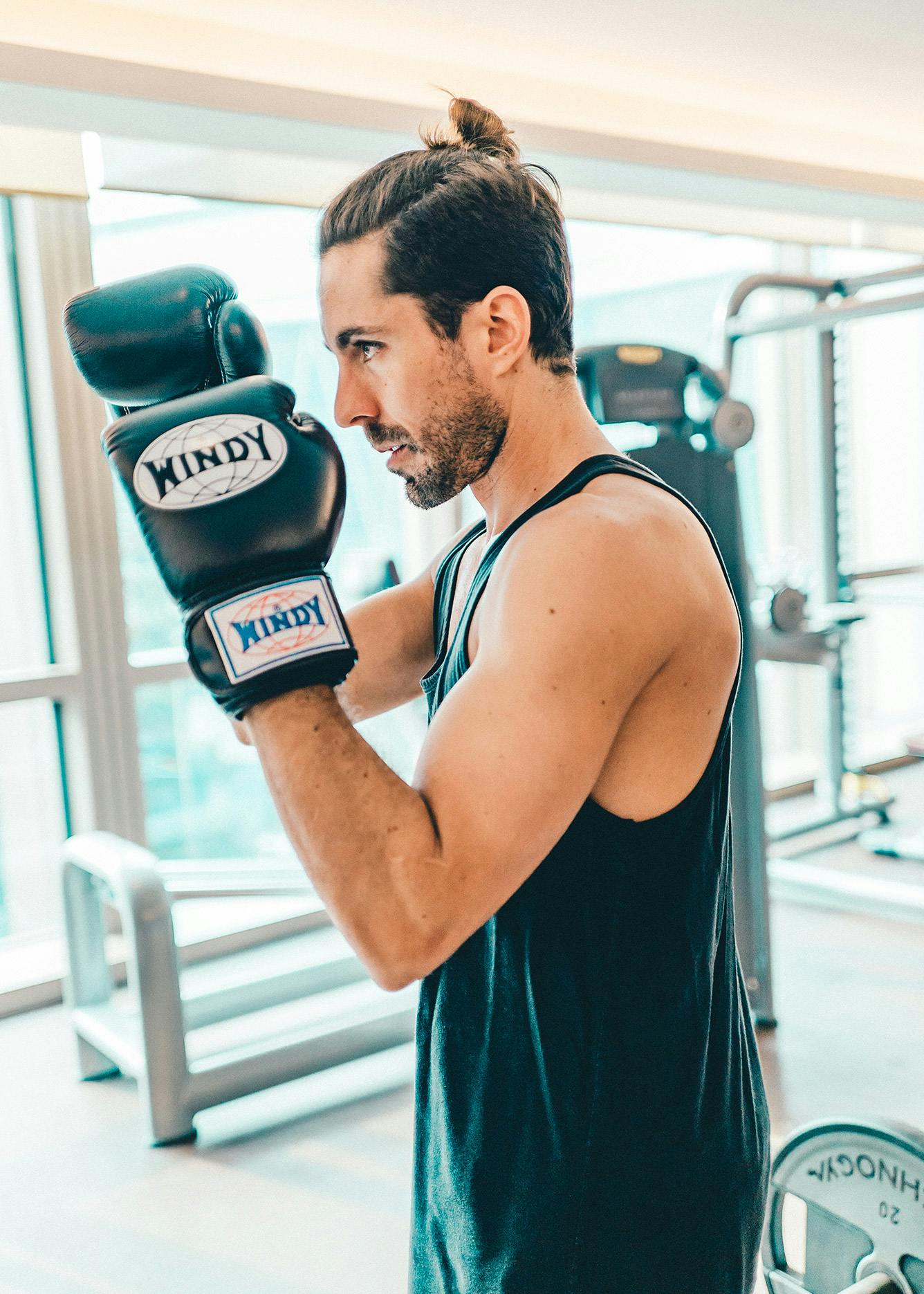
Nowadays, it is well known that buhurt combines several disciplines. These include wrestling, boxing, fencing, and other team and contact sports. The main difficulty of modern Historical Medieval Battle (HMB) is that participants need to be able to perform intense, sharp, and rapid movements while wearing heavy protective equipment.
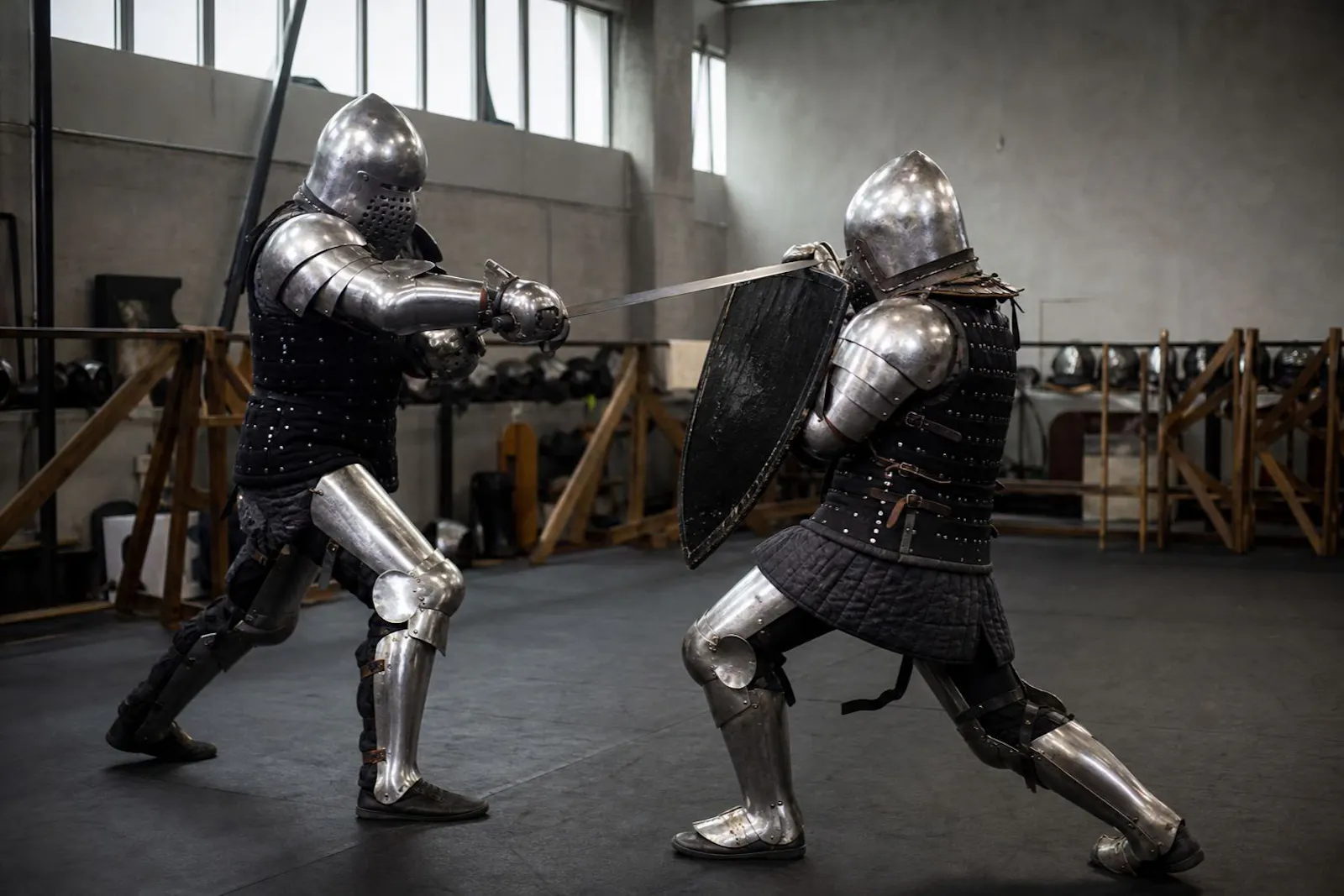
During fights, athletes in the ring/arena must also stand up to their opponents. Therefore, it is equally important for participants to take into account their aerobic and anaerobic exercise capabilities in order to reduce their heart rate and blood lactate levels during fights. Proper training in buhurt is what holds the key to victory.
Endurance, Strength, and Movement Under Heavy Equipment
During tournaments, it is important for all athletes to maintain their stability, be able to change the direction of their movements sharply, and deliver strikes despite the considerable weight of their equipment (uniforms, armour, protective gear, weapons, and so on). The fact is that almost all components are made of steel or titanium, which is why physical fitness plays an important role in buhurt.
According to some studies, energy expenditure when walking in historical armour can increase by up to 2.1 - 2.3 times, while running can increase it by approximately 1.9 times compared to moving without armour. Essentially, the heavy equipment load requires a fighter to have exceptional endurance and specific physical conditioning. These are the main qualities that modern knights should possess:
- High willpower and endurance to maintain intense fights (training sessions, work).
- Strength in the legs, core, and shoulder girdle (which will constantly receive strikes from opponents).
- Coordination to maintain balance and precision of movement.
Due to its high metabolic demands, buhurt has gradually evolved into a sport in which athletes' physical endurance and skills are very important.
How Buhurt Armour Influences Athletic Performance
The weight and design features of buhurt equipment directly affect movement speed, manoeuvrability, and energy expenditure. Depending on the specific configuration, modern equipment can weigh from 14+ to 30 kilograms or even more. It all depends on the number of weapons and protective components, the selected metal material, and so on.
At the same time, the entire load is clearly distributed between the body armour, arm and leg protection, as well as the helmet. If the elements are selected incorrectly, the athlete will not be able to move properly or even breathe normally. Essentially, the heavier the equipment set, the faster the participant will become exhausted during a fight or training session.
Weight Distribution, Protection, and Mobility
If the weight of the equipment set is distributed properly, the participant can maintain stability and efficiency in the arena during fights. It is very important that the weight of the equipment is not concentrated on individual parts of the body, as the mass should be distributed evenly. It is also necessary to make sure that the armour does not restrict movement or interfere with the bending of the limbs.
Before choosing protective gear, it is important to take several important aspects into account, namely:
- Balance of weight between the upper and lower parts of the body.
- Complete freedom of movement, especially around the shoulders, elbows, knees, and hip joints.
- Reliability of fastenings and the absence of exposed areas of the body.
Properly selected equipment will allow the athlete to last longer in combat, feel comfortable, and enjoy its functionality.
Training Methods Used by Modern Armored Fighters
The preparation stages for buhurt competitions should be based on a combination of the athlete's general physical fitness and actual combat practice. Most often, participants use strength exercises, interval training, wrestling tactics, boxing movements, and practice team confrontations. All of this contributes to future victories.
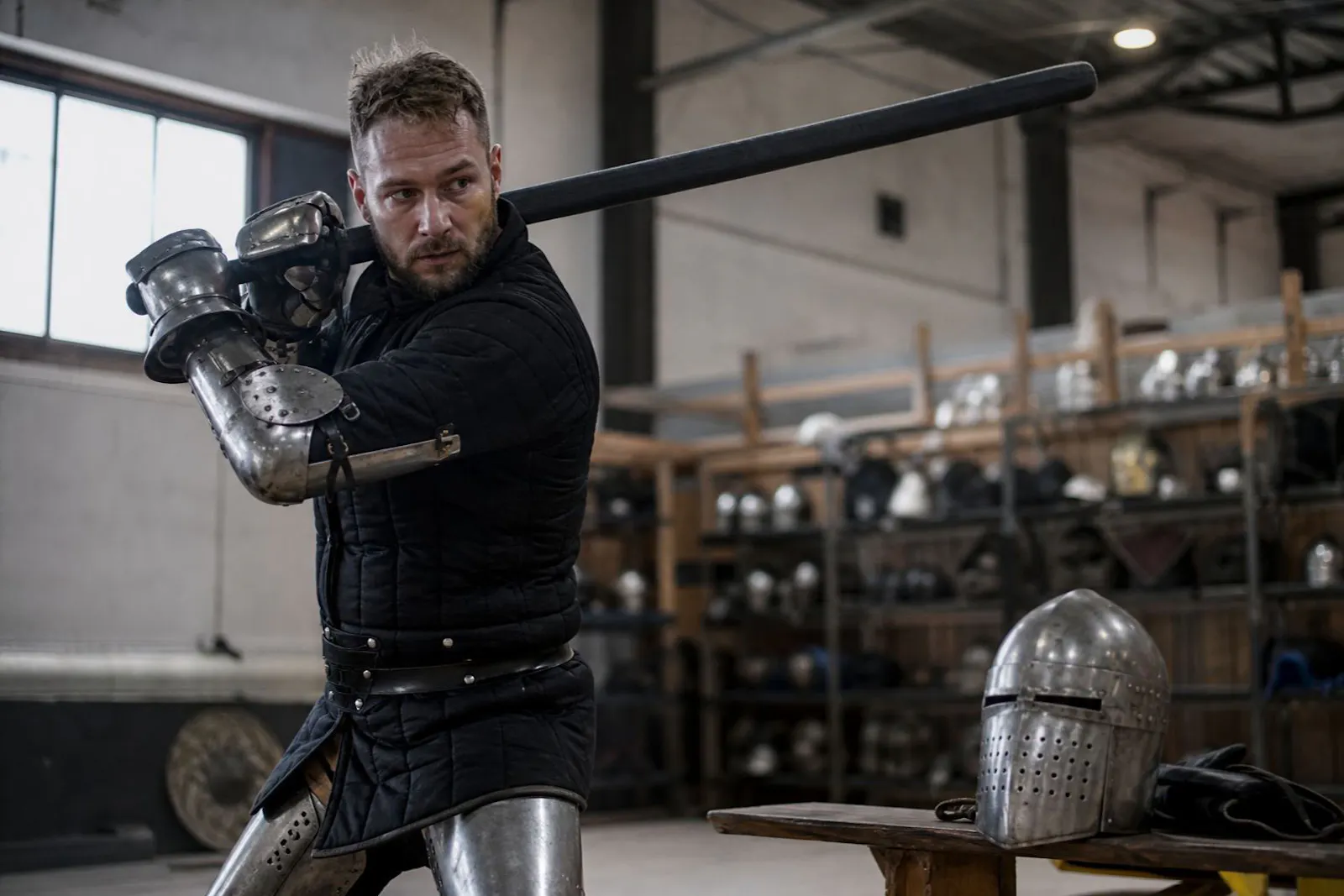
However, to feel even more confident, athletes should also learn weightlifting, CrossFit, judo, Muay Thai, MMA, and so on. Special attention should be paid to professional training in lightweight protective equipment. This will allow athletes to master combat skills without constantly using heavy metal armour, which is required for participation in official championships and tournaments.
Conditioning, Recovery, and Injury Prevention
Regular HMB training sessions should also be accompanied by proper recovery. The fact is that intense physical loads often affect the muscles, joints, and cardiovascular system. Therefore, a proper start to a training session involves a full warm-up. For example, the important components of preparation include:
- Warm-up and a gradual increase in its intensity.
- Sufficient time for proper sleep and the body's recovery.
- Checking the condition of protective equipment before training sessions.
At the end of an intense training session, it is also worth doing a light warm-up.
Why Proper Equipment Selection Is Essential for Beginners
Before purchasing their first set of armour, a beginner should make sure that it does not restrict movement and fully covers all vulnerable areas of the body. This approach will help avoid negative consequences, including injuries. Metal protective gear for this sport is a responsible and mandatory choice, as this is specified in the official competition regulations. It is always possible to start with training in lightweight equipment. However, a gradual transition to full equipment sets after adapting to the physical loads is a mandatory stage.