11 Best Beaches on the Big Island, Hawaii - For Black Or White Sand (With Map)
From dramatic black sand to pure white sand shorelines with aqua blue waters to the world's only truly green sand beach, the Big Island of Hawai'i offers some of the most diverse coastal landscapes in the Hawaiian Islands. Everything you need to know to plan your trip with Practical details on access, parking, walking distance, and ocean conditions - including secret beaches you won't see anywhere else - with a downloadable Google Map!

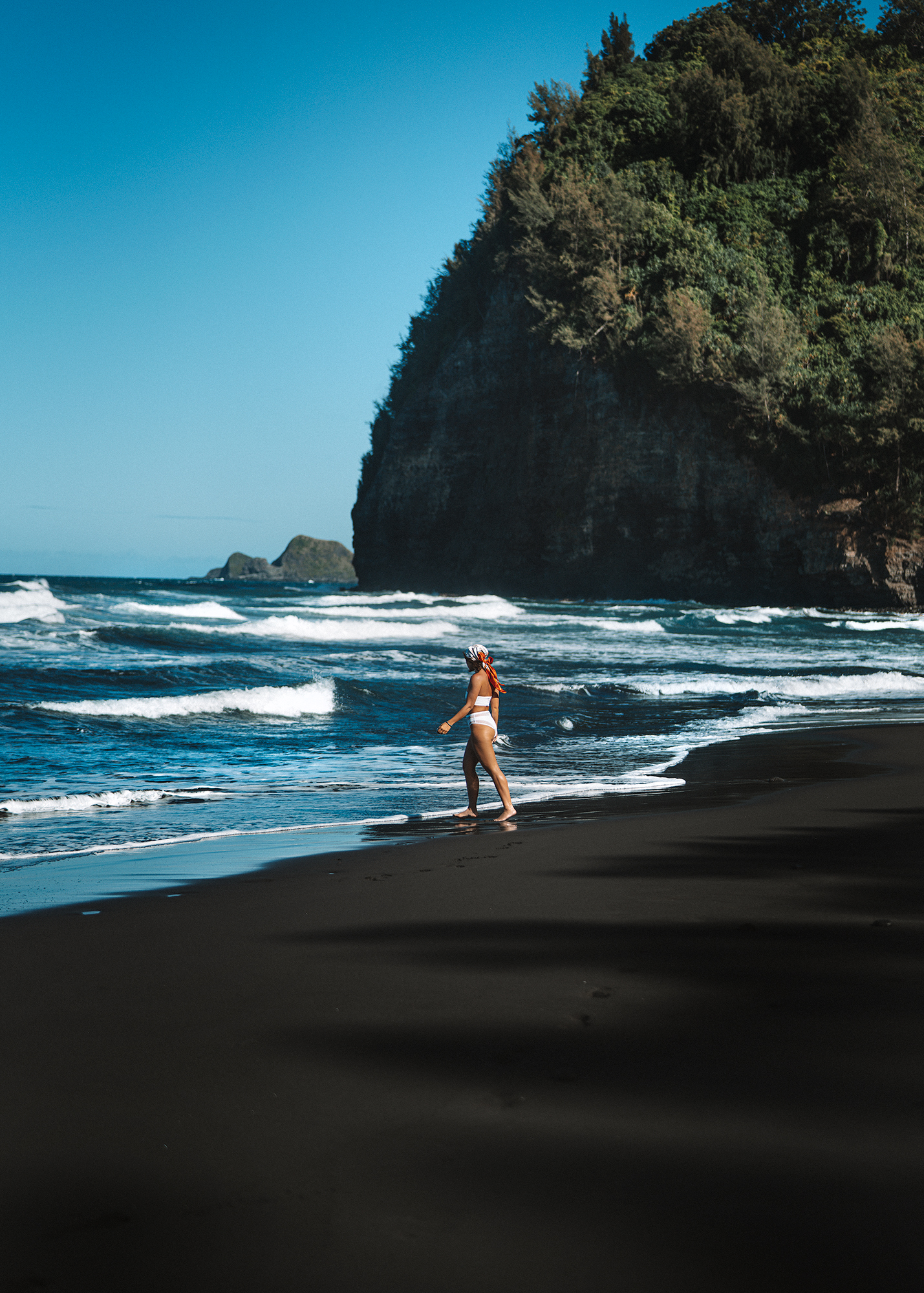
Powdery white sand beach or otherworldly pure black sand beach? The island of Hawai'i has them both!
+ Want to save every spot easily? Scroll to the bottom of this post for a downloadable Google Map! +
1. Papakōlea Green Sand Beach
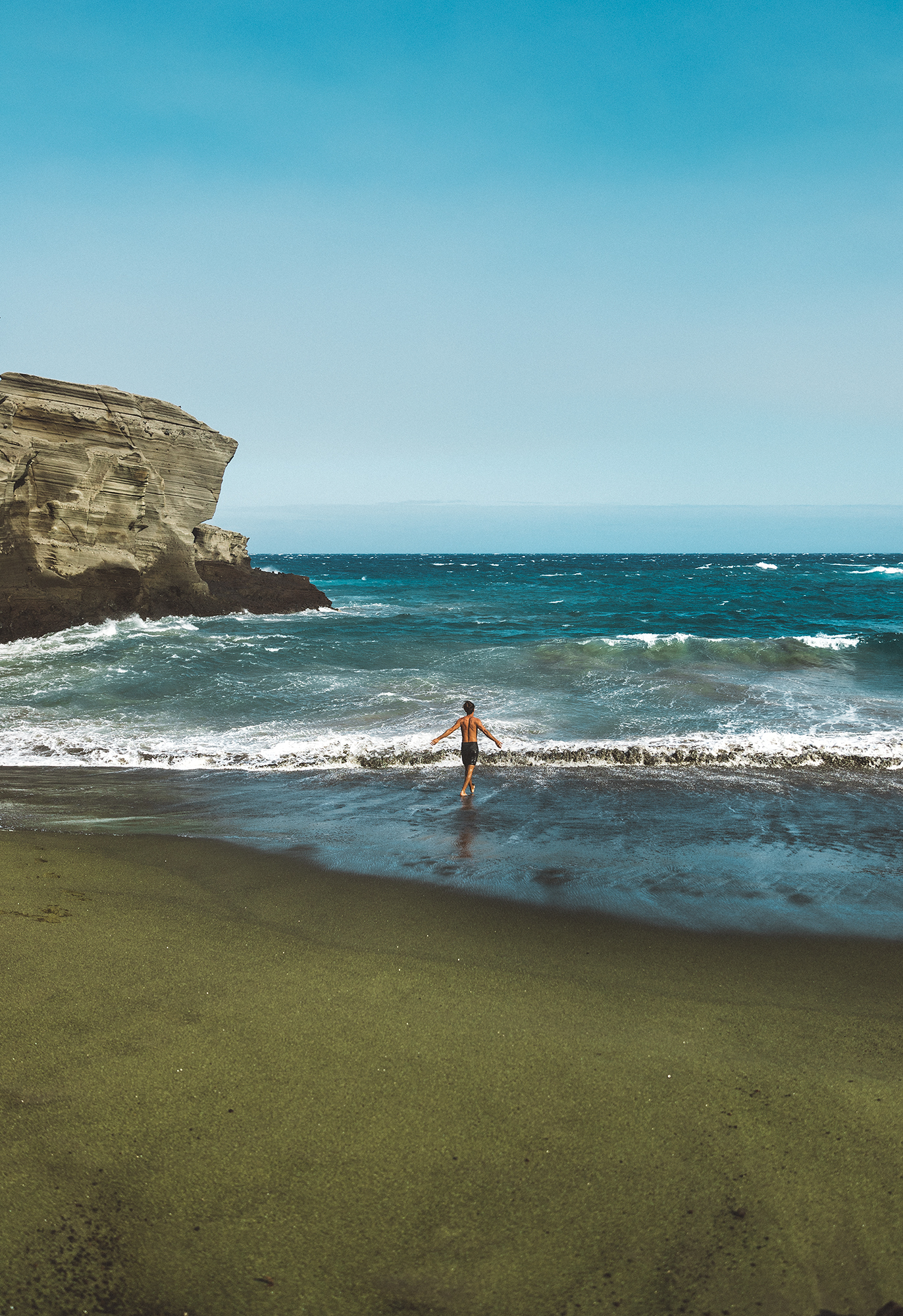
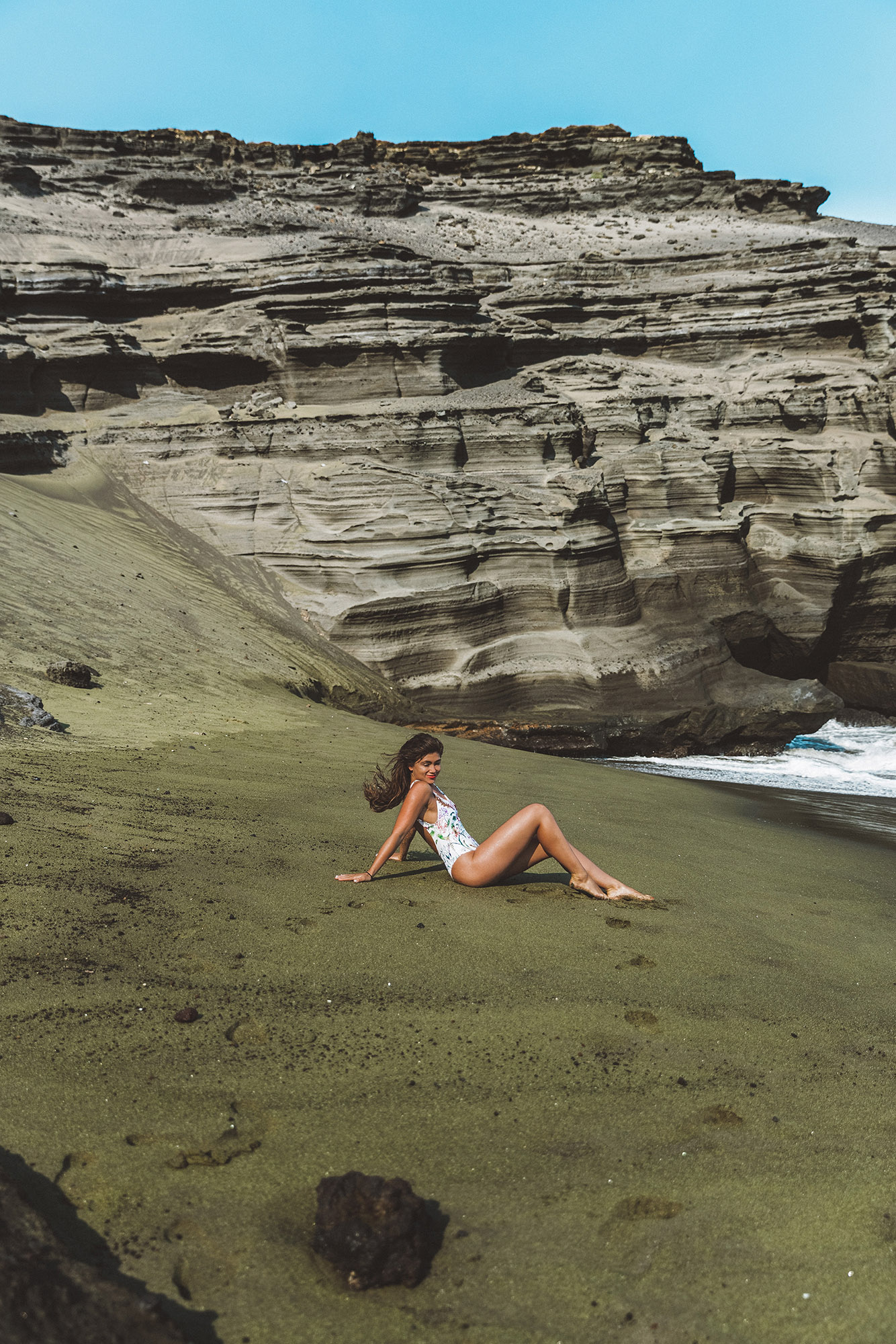
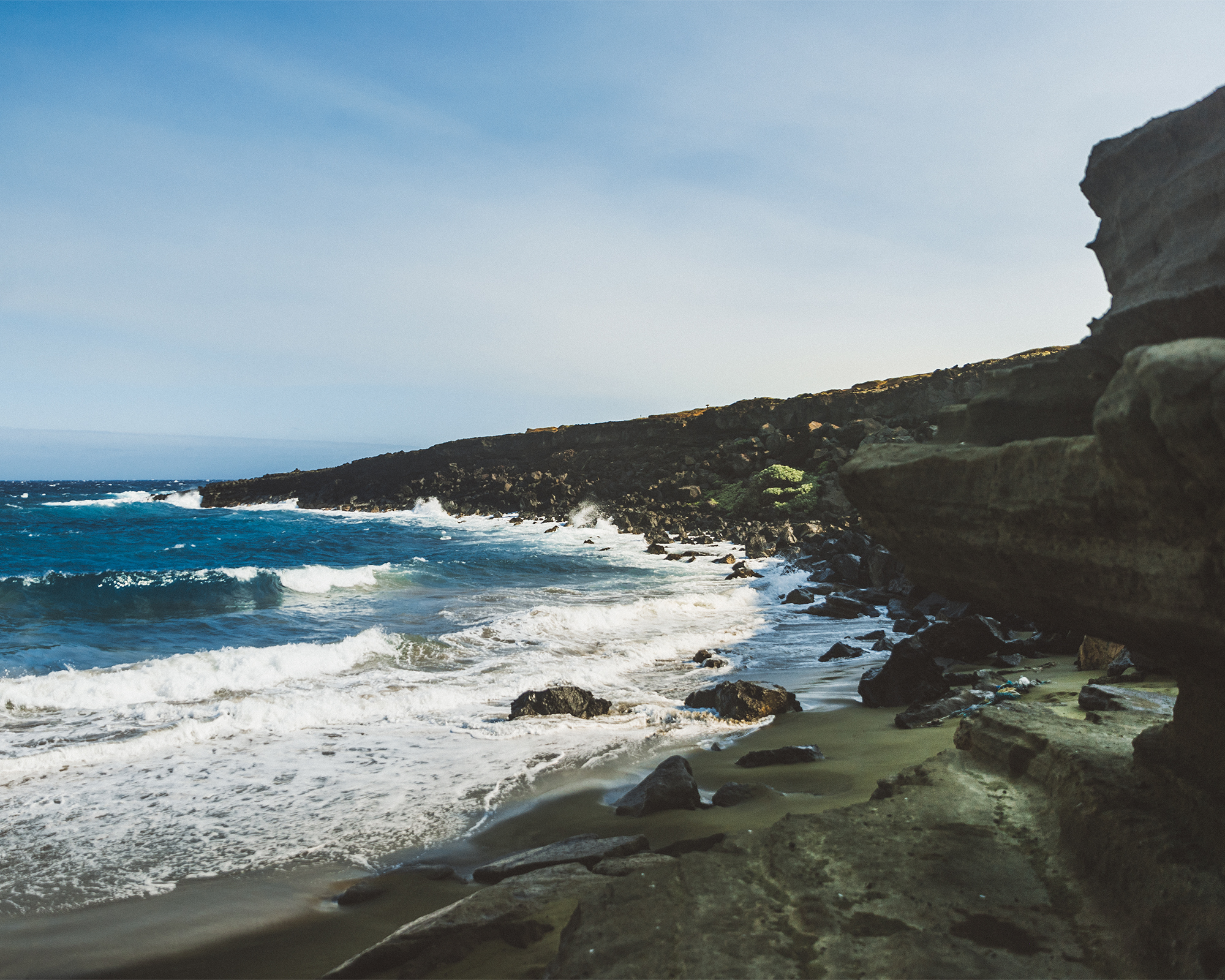
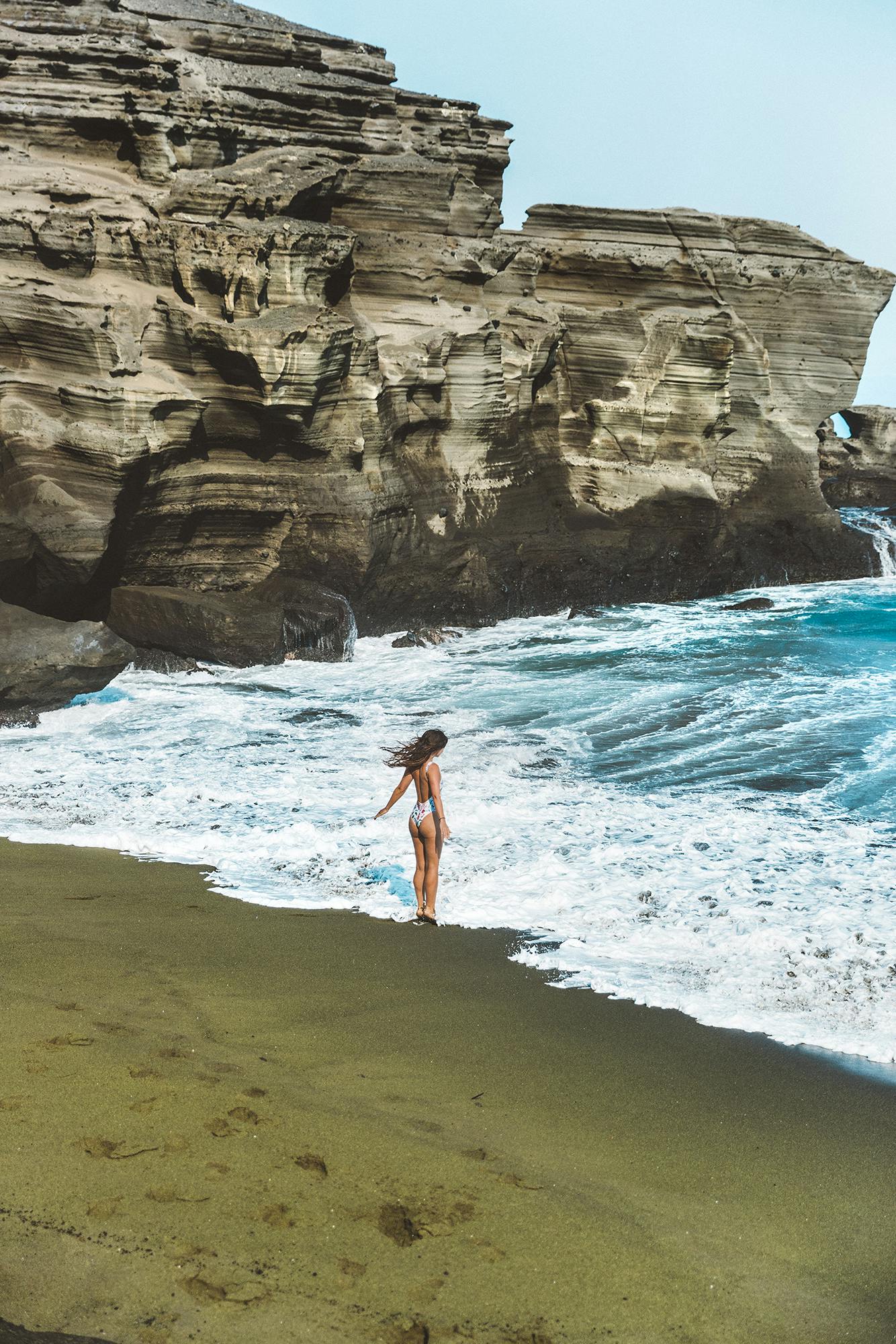
Papakōlea Green Sand Beach occupies a singular place on the Big Island’s coastline, where olivine crystals wash up against a remote shoreline that few beaches elsewhere can rival. The drive to the trailhead winds through stark lava fields and open landscape, and the hike itself is as much a part of the experience as the destination. Because few amenities exist here and ocean conditions are highly variable, most visits focus on the geological rarity, the color-shifting sand, and the physical challenge required to reach this unique cove rather than lengthy water time.
Read my full guide to Papakolea Beach here
- Parking: Small informal lot near the southern terminus of South Point Road, often crowded
- How to reach: Approximately 2.5-mile one-way hike over uneven terrain
- Ocean conditions: Rough with strong currents typical; best appreciated from shore
- Known for: One of the only green sand beaches in the world and an iconic geological feature
- Hazards: Heat exposure, no shade, unstable footing, unpredictable surf
2. Pololū Beach
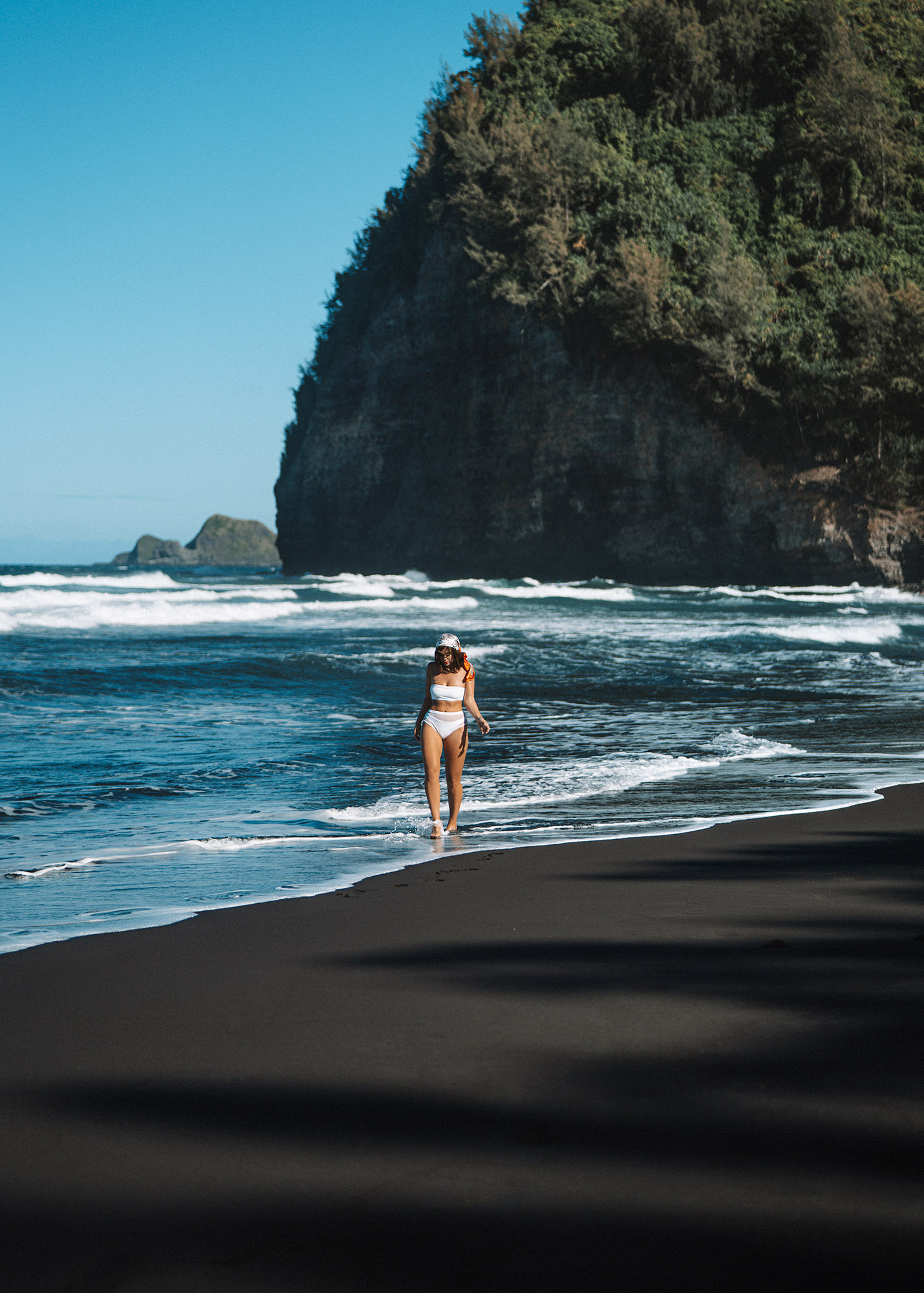
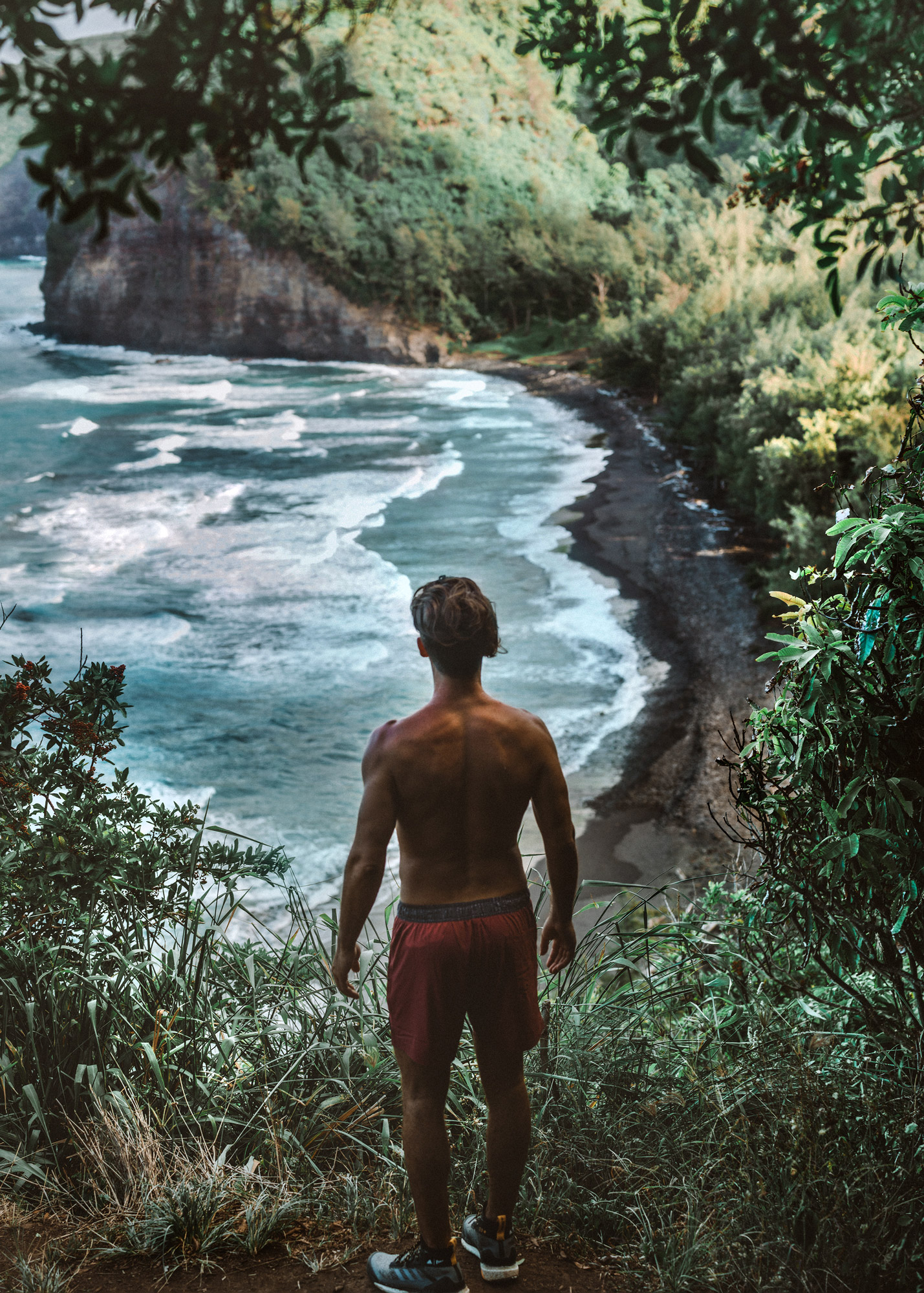
Pololū Beach sits at the mouth of a verdant valley where lush slopes spill down to meet a black sand shore shaped by volcanic minerals and vigorous surf. The trail down into the valley is relatively easy, but a little steep (especially on the climb back up) - but the views into the valley and out to the open ocean reward those who undertake it. The beach is dramatic in both color and scale, and despite its beauty, currents here are strong enough that many visitors admire the water without entering it for extended swimming.
- Parking: Small free lot at the Pololū Valley overlook
- How to reach: Steep hike down and back out of the valley
- Ocean conditions: Powerful swells and strong currents are common
- Known for: Striking black sand at a valley mouth and panoramic coastal views
- Hazards: Slippery trail sections and dangerous swimming conditions
3. Makalawena Beach
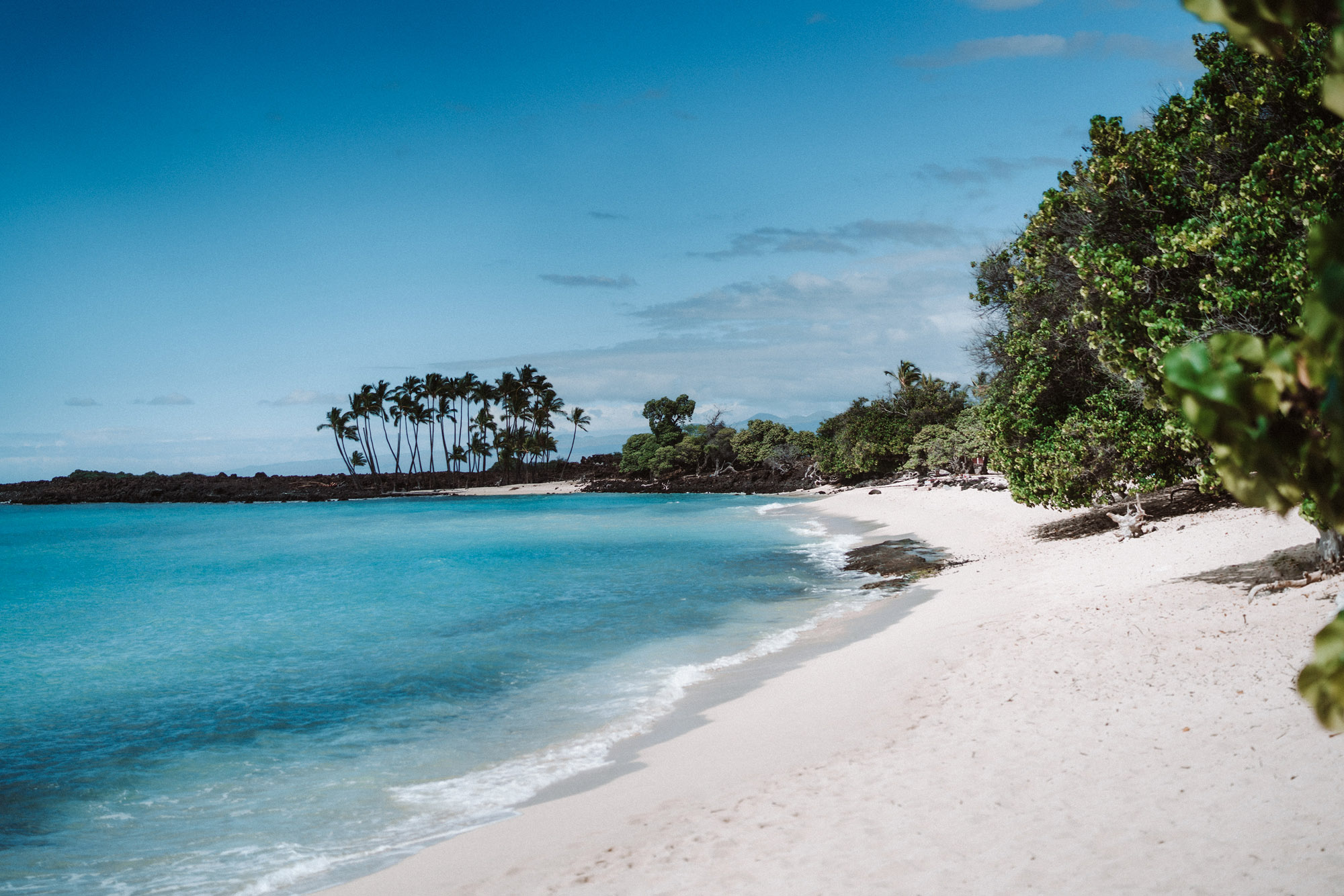
Makalawena Beach exists at the intersection of dramatic terrain and relative seclusion, where sand and lava rock coalesce into a beach that feels both timeless and immediately immersive. The walk from the parking area over heat-warmed volcanic rock requires sturdy footwear and forethought, but it also acts as a natural filter that keeps the beach quieter than others closer to paved roads. The payoff is a wide shore framed by dunes and wind-washed grasses that invite longer stays when conditions are gentle.
- Parking: Unpaved lot near the Kekaha Kai State Park boundary
- How to reach: Rough road followed by a walk across lava toward the shoreline
- Ocean conditions: Typically calmer in summer months, textured by wind and tide shifts
- Known for: Expansive white sand and dune scenery
- Hazards: No facilities, heat-reflecting lava fields
4. Kumukea Beach
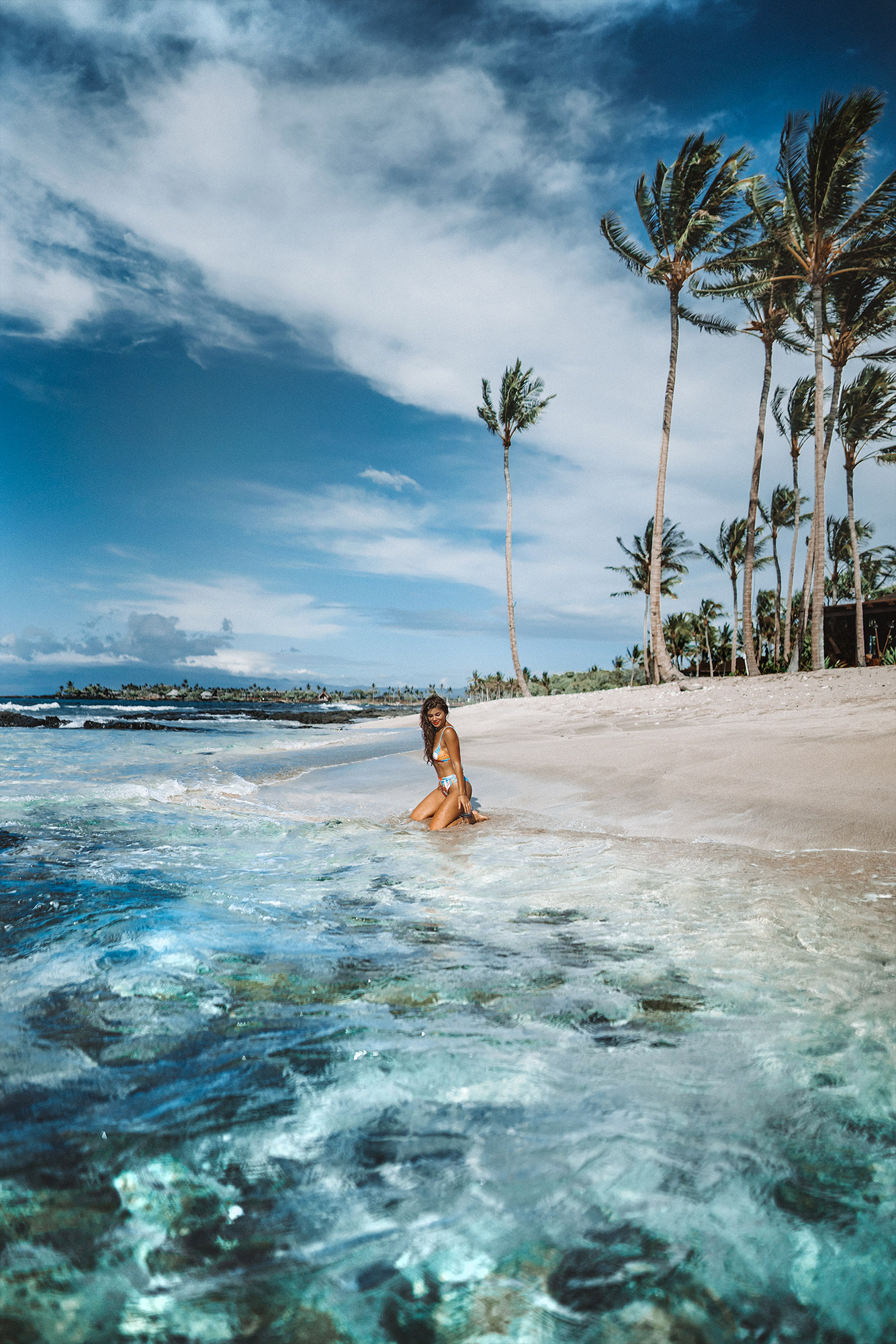
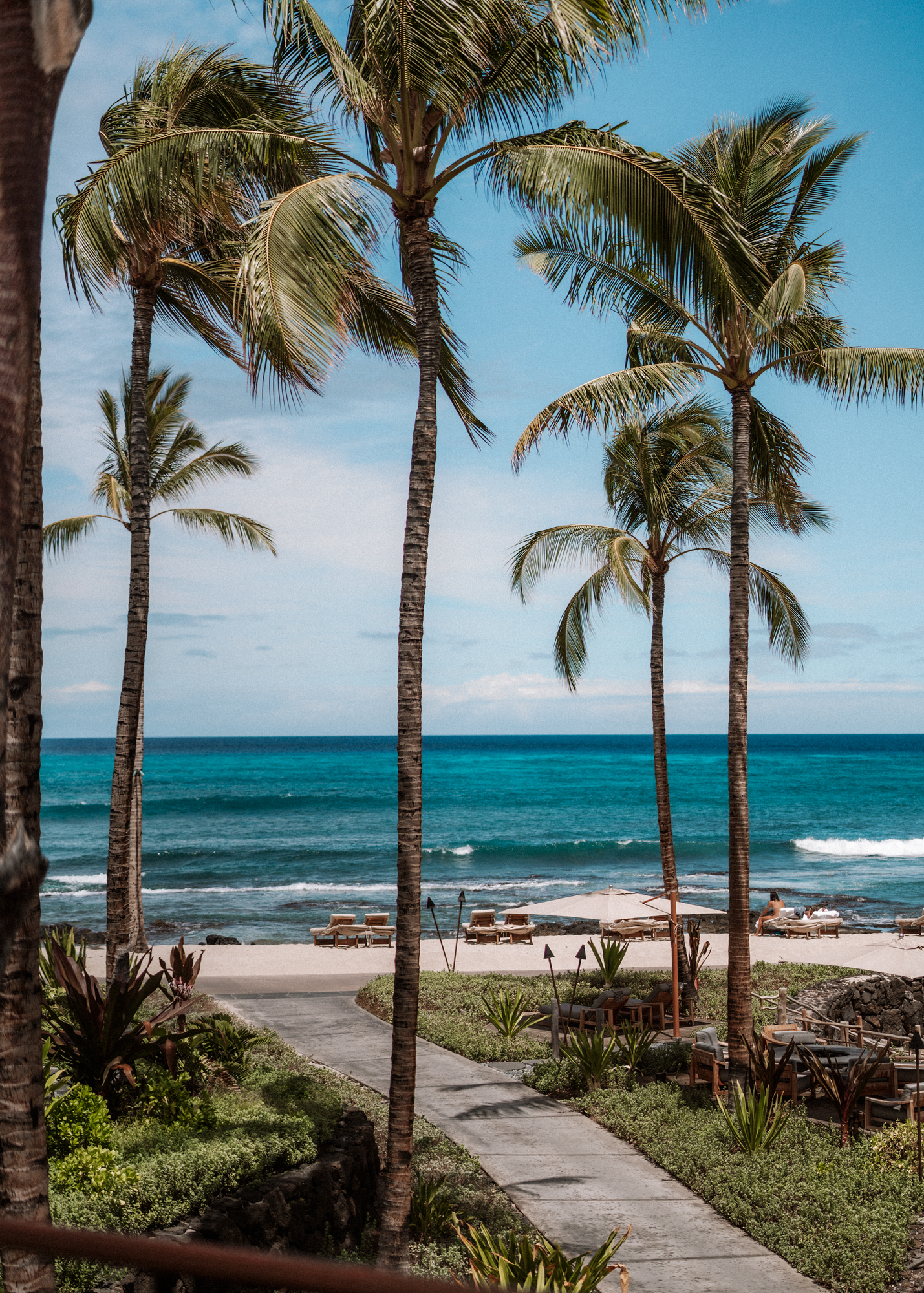
Kumukea Beach, located at The Four Seasons Hualalai Resort (but remember, by law all beaches in Hawaii are open to the public!) presents a different personality from many of the island’s expanses of sand: here, ocean access is calmed by protective rock and reef, with surf from open Pacific swells. This shoreline remains lightly visited and instinctively rugged, appealing primarily to those already comfortable navigating variable ocean terrain rather than casual beach sessions. When conditions align, the sound of breaking waves and the backdrop of coastal hills create an elemental sense of place.
- Parking: Roadside parking near the shoreline with limited spaces
- How to reach: Short rough walk from the parking area
- Ocean conditions: Frequent chop and waves; uneven entry
- Known for: Quiet, undeveloped ocean edge
- Hazards: Sharp rock, reefs, and sudden waves
5. Kehena Beach
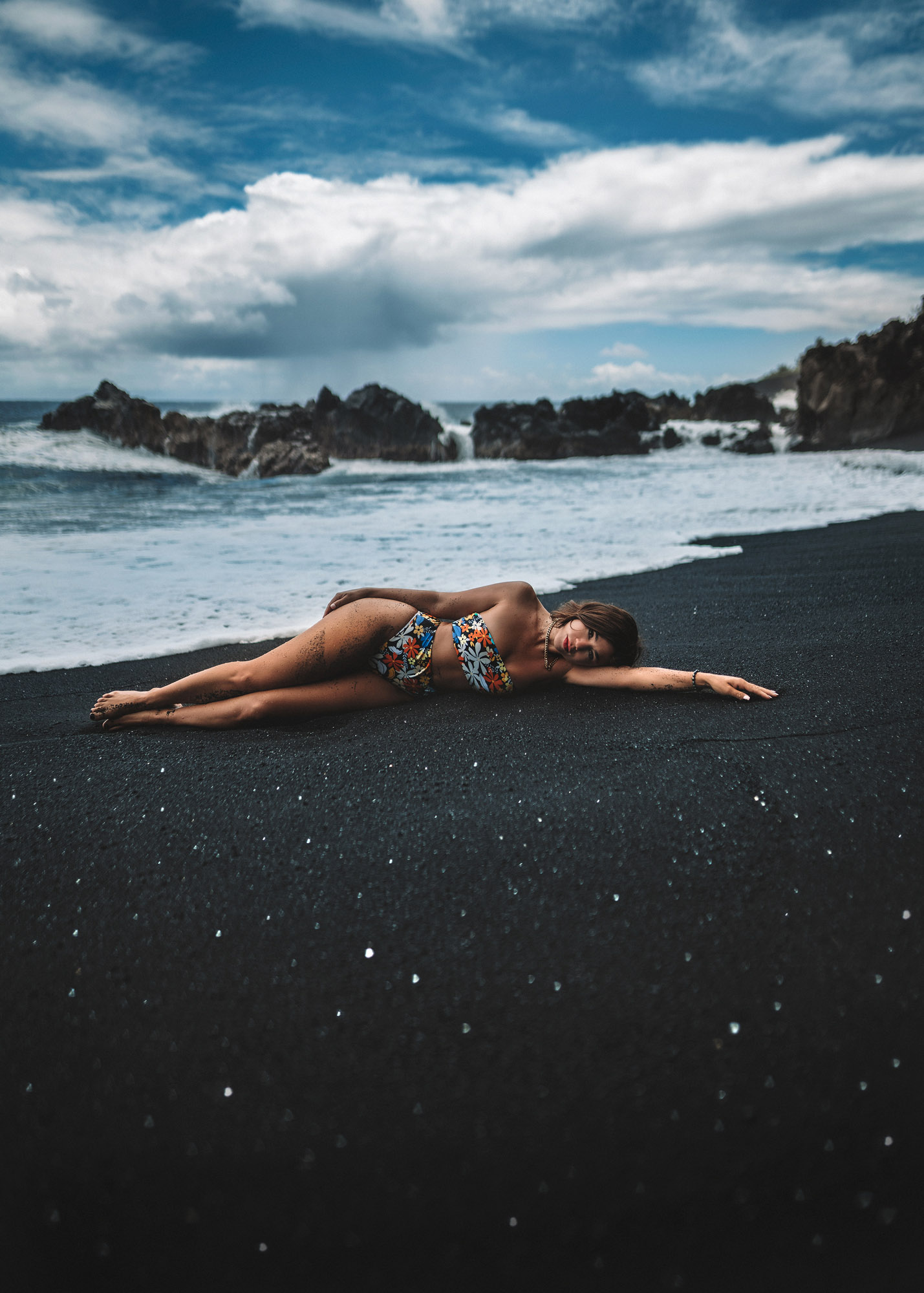
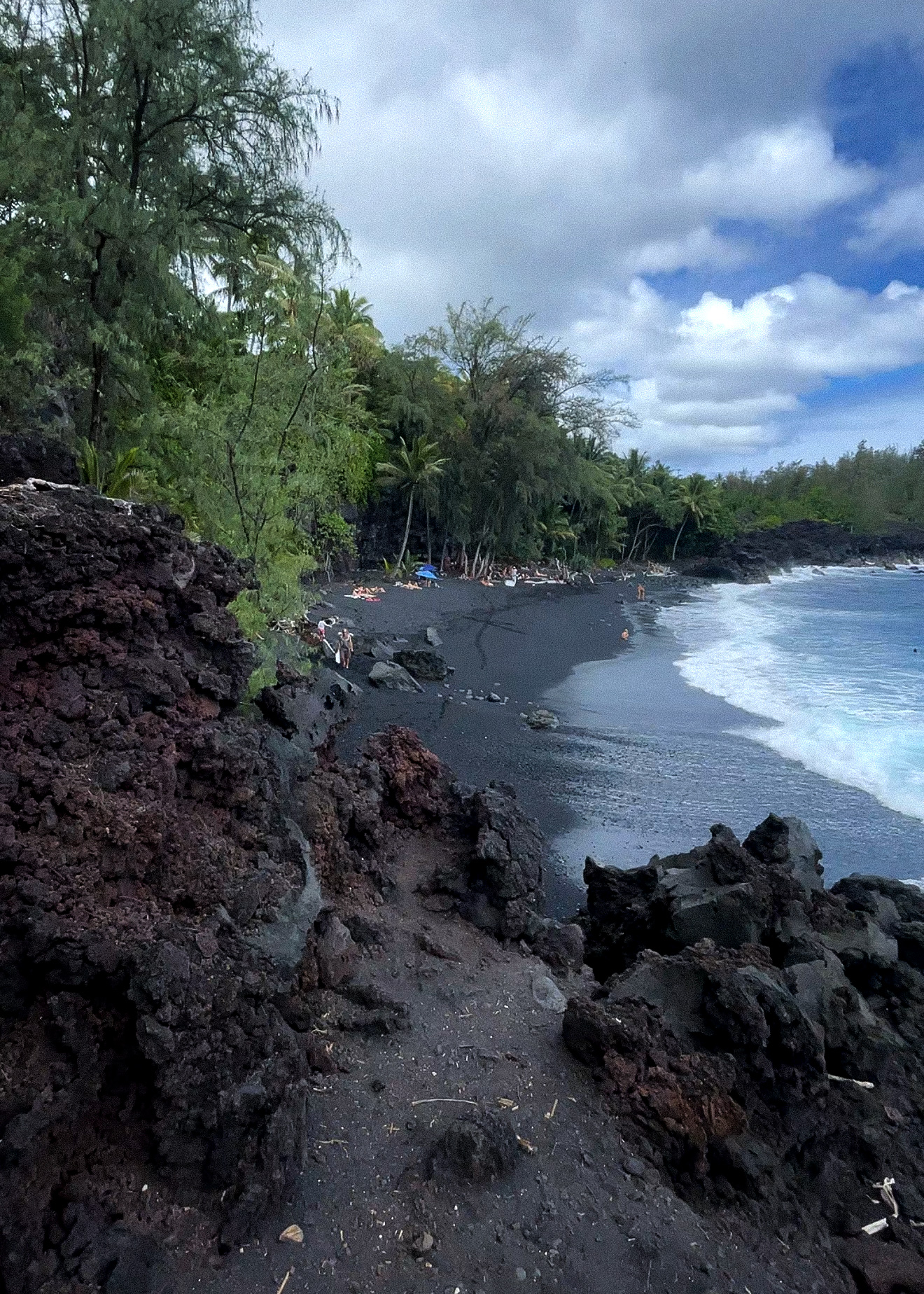
Kehena Beach is defined by its striking black sands and an unpolished shoreline where jungle meets open swell, a juxtaposition that lends the beach an alluring yet unpredictable energy. When the surf lies down, it offers moments of warmth and water entry; when the wind and waves pick up, the shore can transform abruptly. This is a beach experienced bodily as much as visually, and even short visits feel shaped by elemental force.
- Parking: Limited roadside spaces near the access path
- How to reach: Trail down through thick vegetation to the beach
- Ocean conditions: Often surf-active with strong shore break
- Known for: Black sand and dramatic vegetation-to-ocean shift
- Hazards: High surf, limited facilities
6. Mahaiʻula Beach
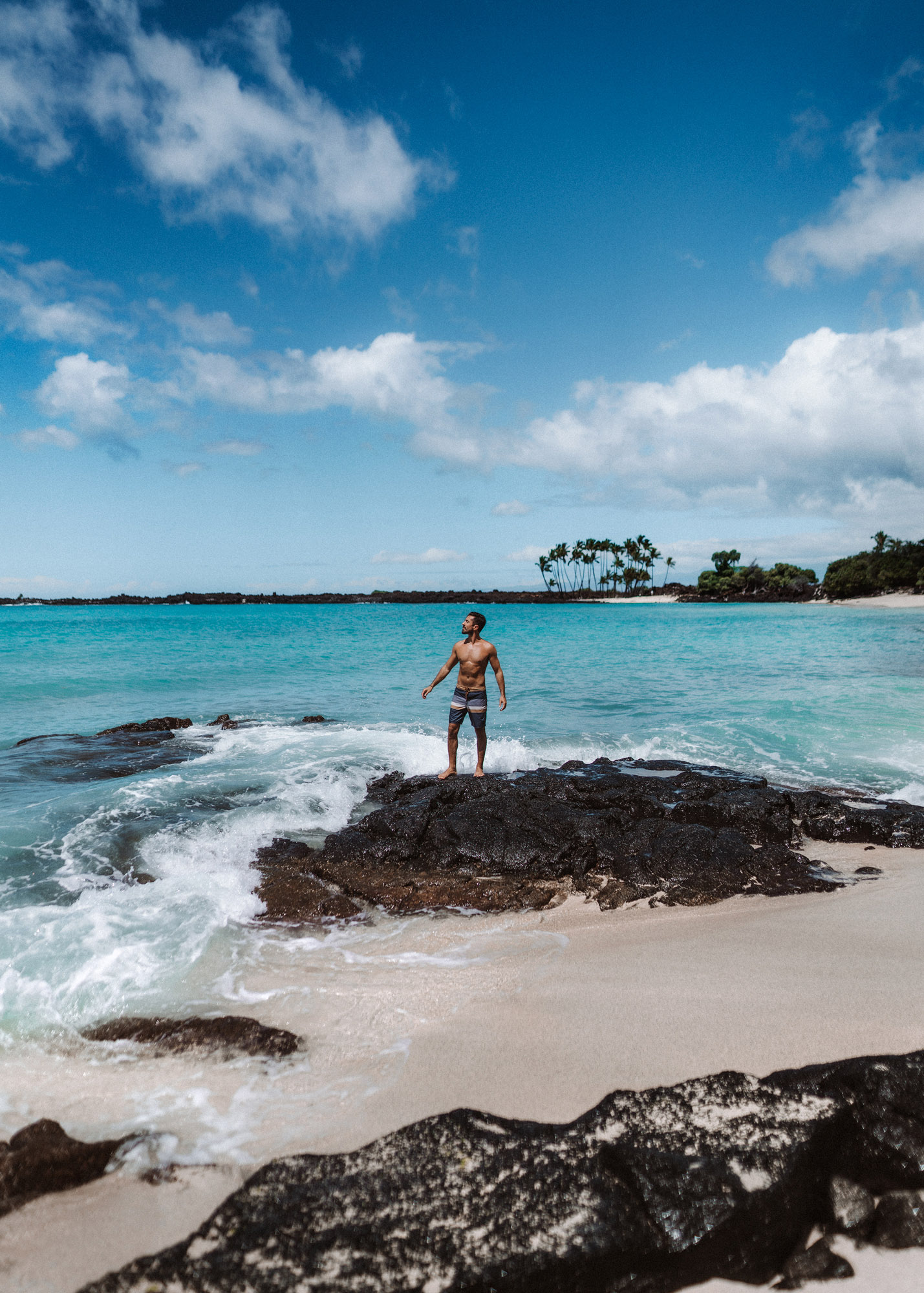

At Mahaiʻula Beach, the sand stretches wide and golden between the ocean and the ragged lava flows that define much of the Big Island’s western coast, creating a sense of space that is rare and valuable. The absence of commercial development reinforces this feeling of remoteness while still offering easy access from the state park lot. Water quality and wave action depend heavily on the day’s conditions, but the shoreline itself provides an expansive canvas for sun, sand, and seaside reverie, with afternoon light often lending a warm, amber glow to the scene.
- Parking: Free unpaved lot within Kekaha Kai State Park, first-come, first-served
- How to reach: Drive-in access with a short flat walk to the beach
- Ocean conditions: Seas can range from invitingly calm to moderately rough, depending on wind and swell
- Known for: Wide, sweeping sand and lava-lined backdrop
- Hazards: Lack of shade, rough road conditions leading to parking
7. Kiholo Bay
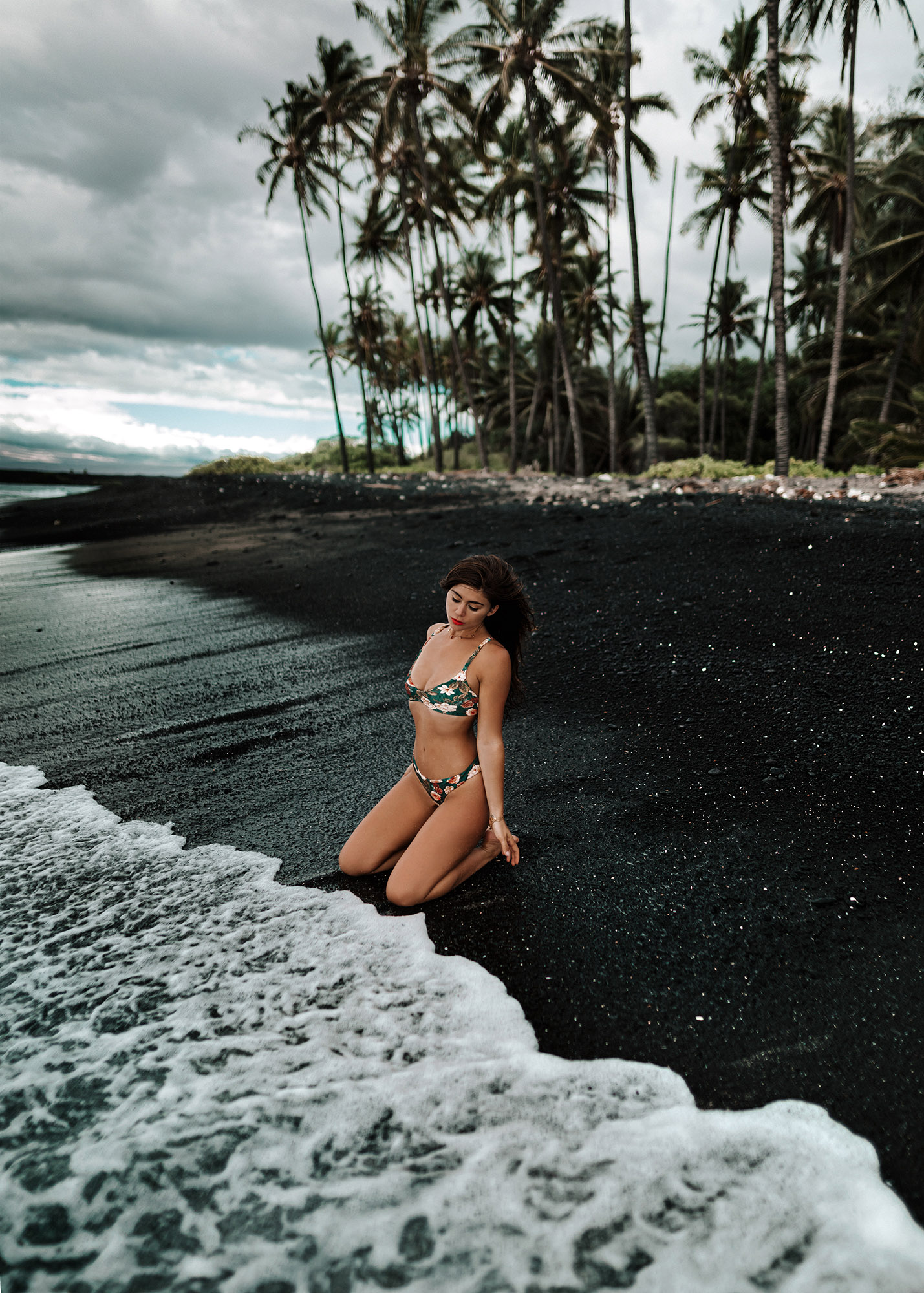
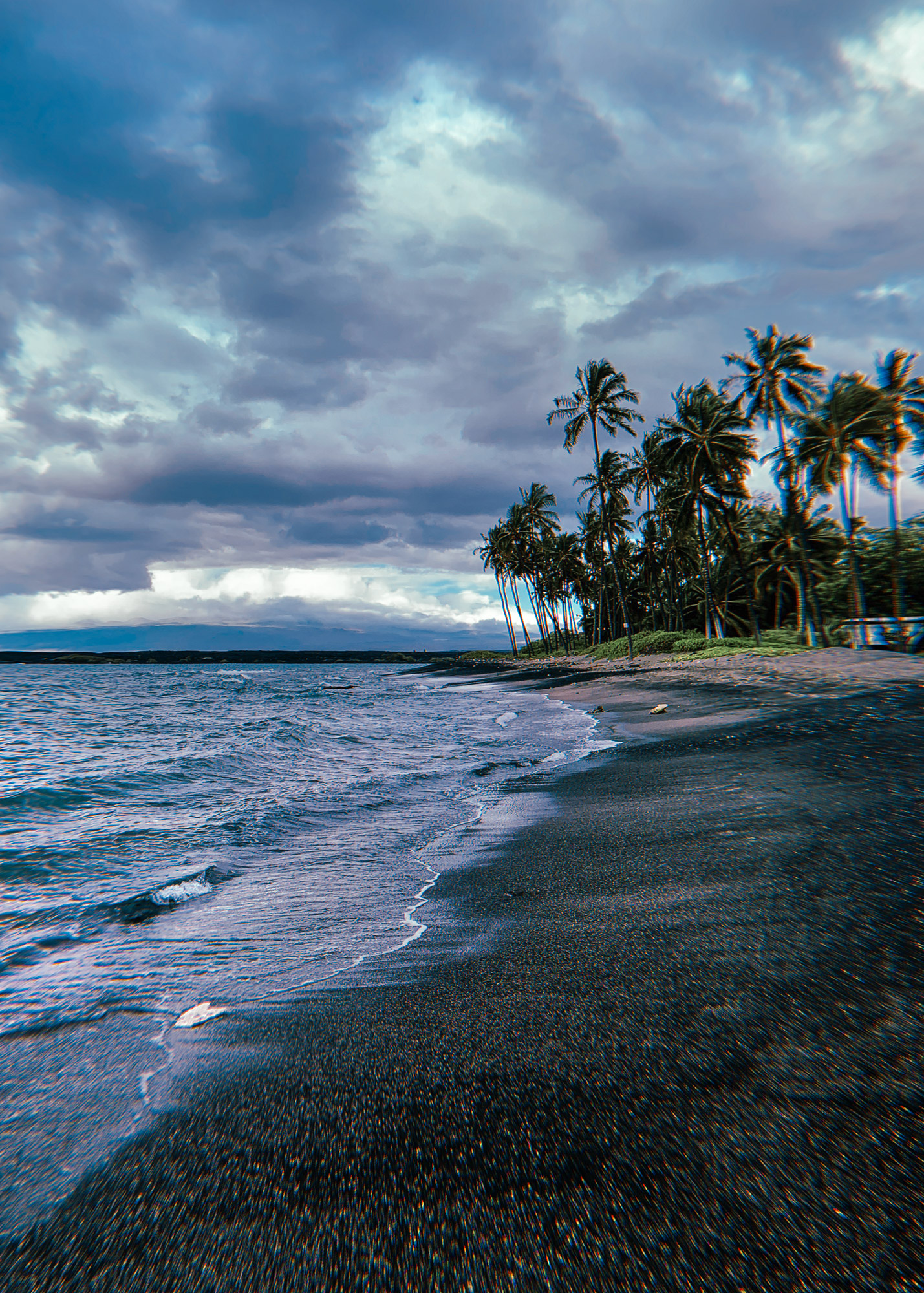
Kiholo Bay is one of the Big Island's lesser-known black sand beaches, and one of the few of these beaches where you are likely to find yourself alone. The shapeshifting coastline of tide pools, coves, and lava-smoothed rock creates a mosaic of species and shoreline textures that unfold at a slower pace than at busier beaches. Access involves navigating rough ground on foot or by bike, which preserves the feeling of remoteness and connection to the land. Opportunities for seeing sea turtles and tropical fish in natural pockets of water make Kiholo Bay feel like a coastal laboratory more than a typical swim spot.
- Parking: Limited spaces near the official entrance; early arrival recommended
- How to reach: Walk or bike across uneven lava fields
- Ocean conditions: Calm in protected tide pools, rougher in open sections
- Known for: Tide pools, marine life, wide-open bay views
- Hazards: Uneven lava terrain and tide pool depths
8. Makolea Beach
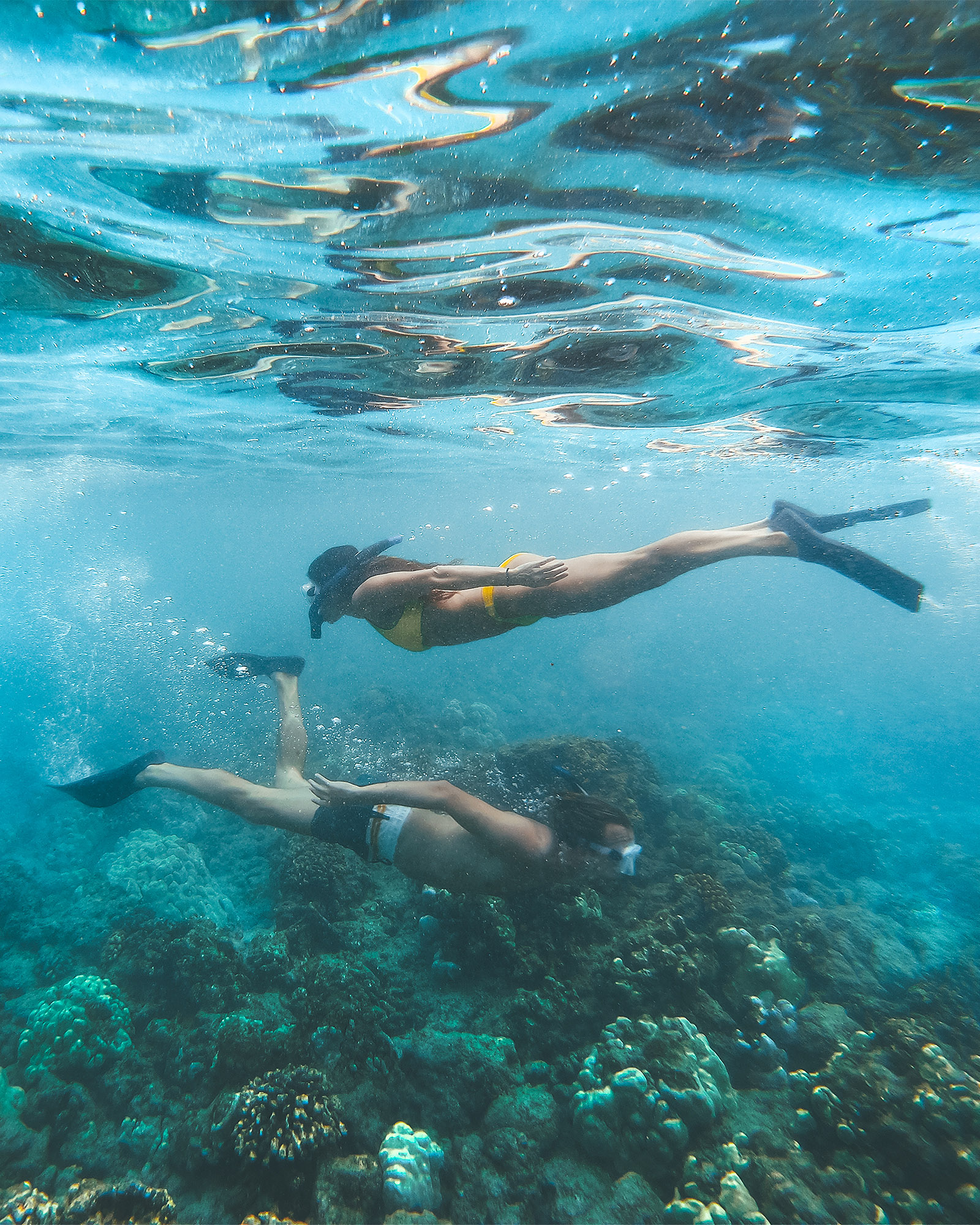
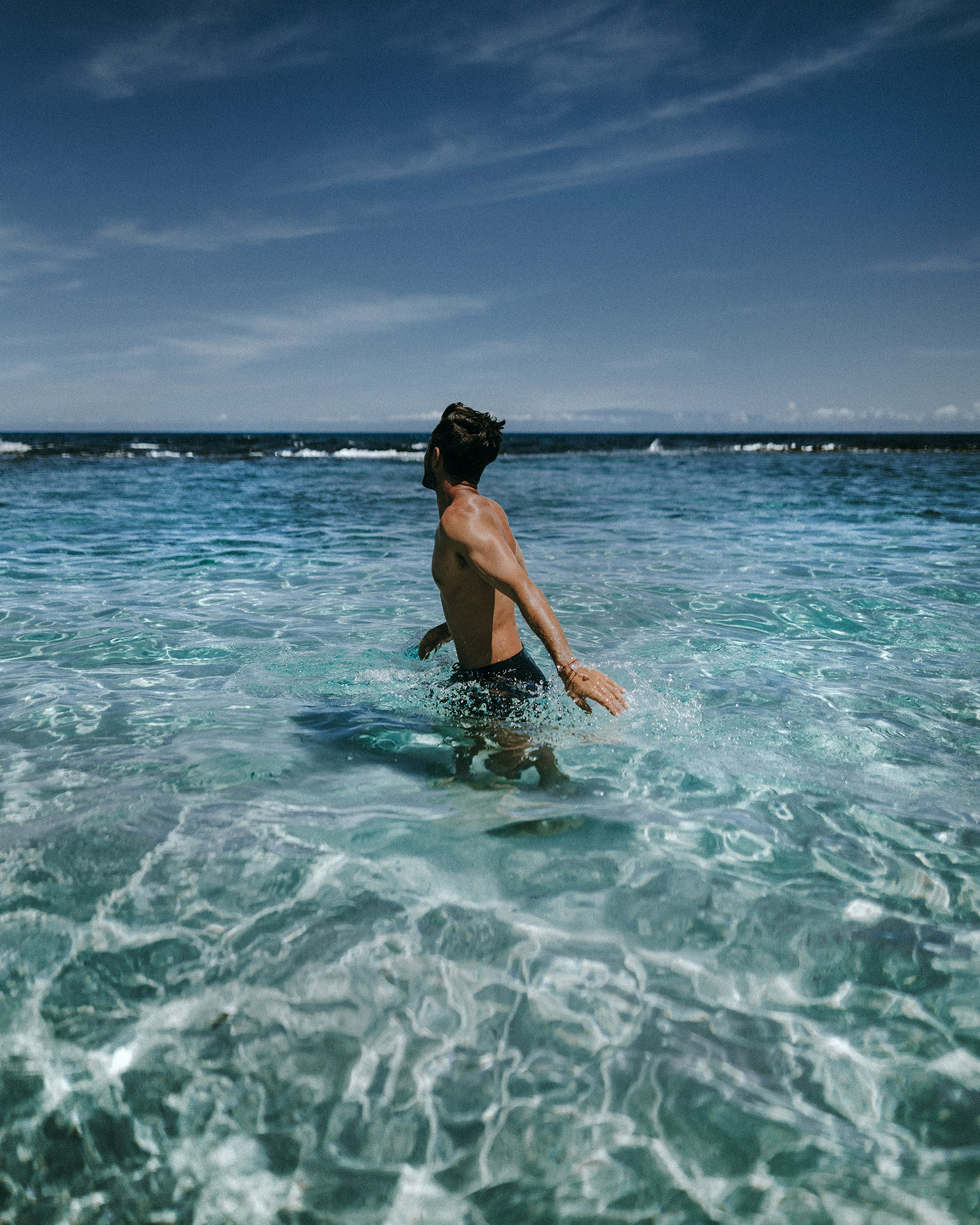
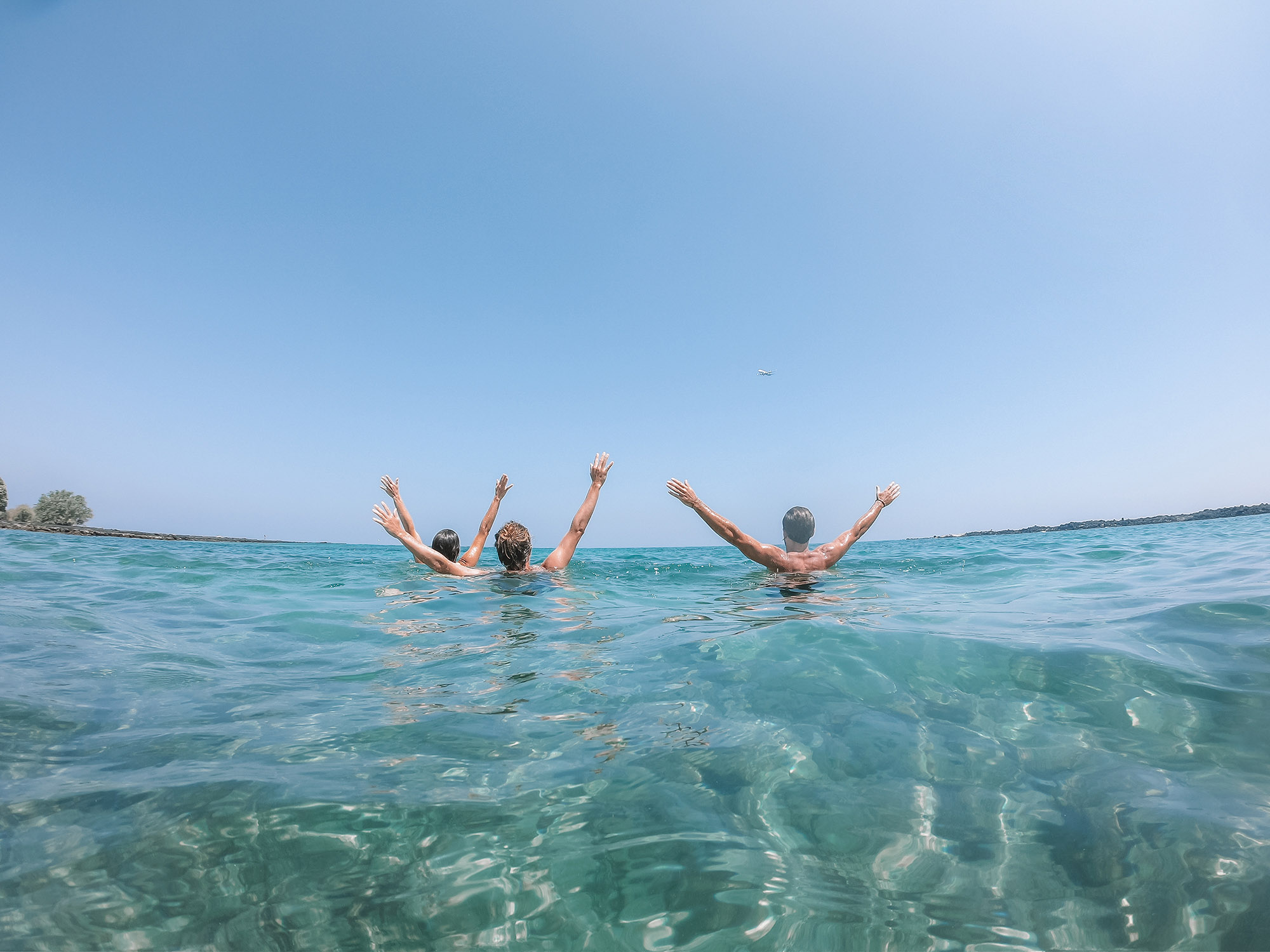
Makolea Beach feels more like a stretch of raw coastline than a curated beach destination, its atmosphere defined by coarse sand and dark lava rock pushed up against open ocean. The shoreline itself changes with each swell, with piles of lava and pockets of sand that shift over time. When conditions allow, brief water entry can be rewarding, but the larger appeal lies in the scenery and quietude absent of nearby infrastructure or crowds.
- Parking: Limited roadside pull-offs with few marked spaces
- How to reach: Short walk from nearby road, often over uneven lava rock
- Ocean conditions: Often choppy with limited calm moments except in low wind
- Known for: Solitude and an undeveloped natural setting
- Hazards: Sharp lava rock, no lifeguards, limited access
9. Punalau Beach
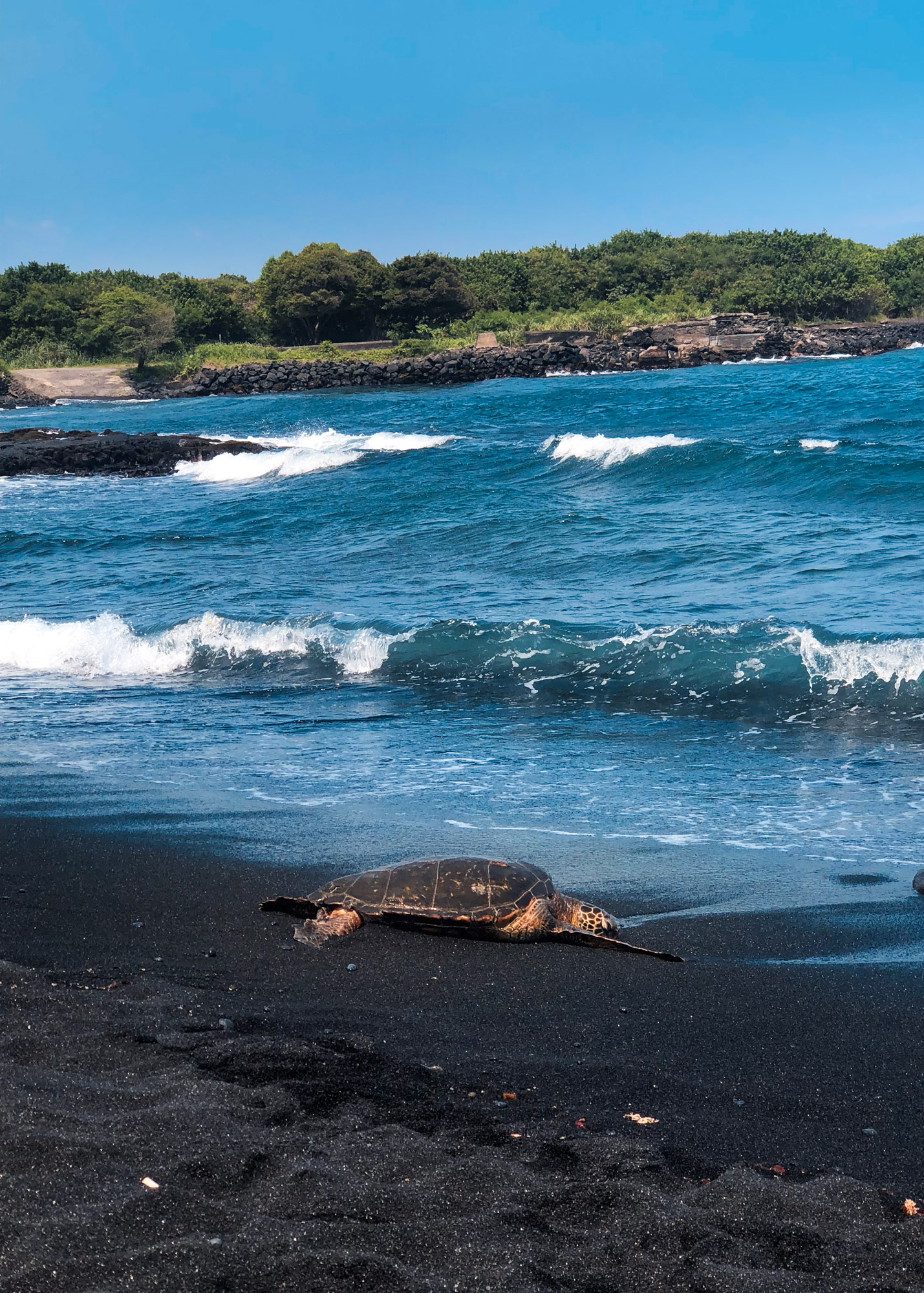

Punalau Beach stretches longer than many neighboring coves, giving it a more open and less contained feel. While it does not offer the same protected swimming conditions as nearby bays, it appeals to those looking for space and minimal infrastructure. Afternoon winds are common, which can roughen the surface quickly even on otherwise calm days.
- Parking: Free roadside parking near the beach access
- How to reach: Short walk from pull-off areas along the coastal road
- Ocean conditions: Variable, with stronger currents during high surf
- Known for: Open views, quieter atmosphere, shoreline walks
- Hazards: No lifeguards and limited shade
10. Waipiʻo Black Sand Beach
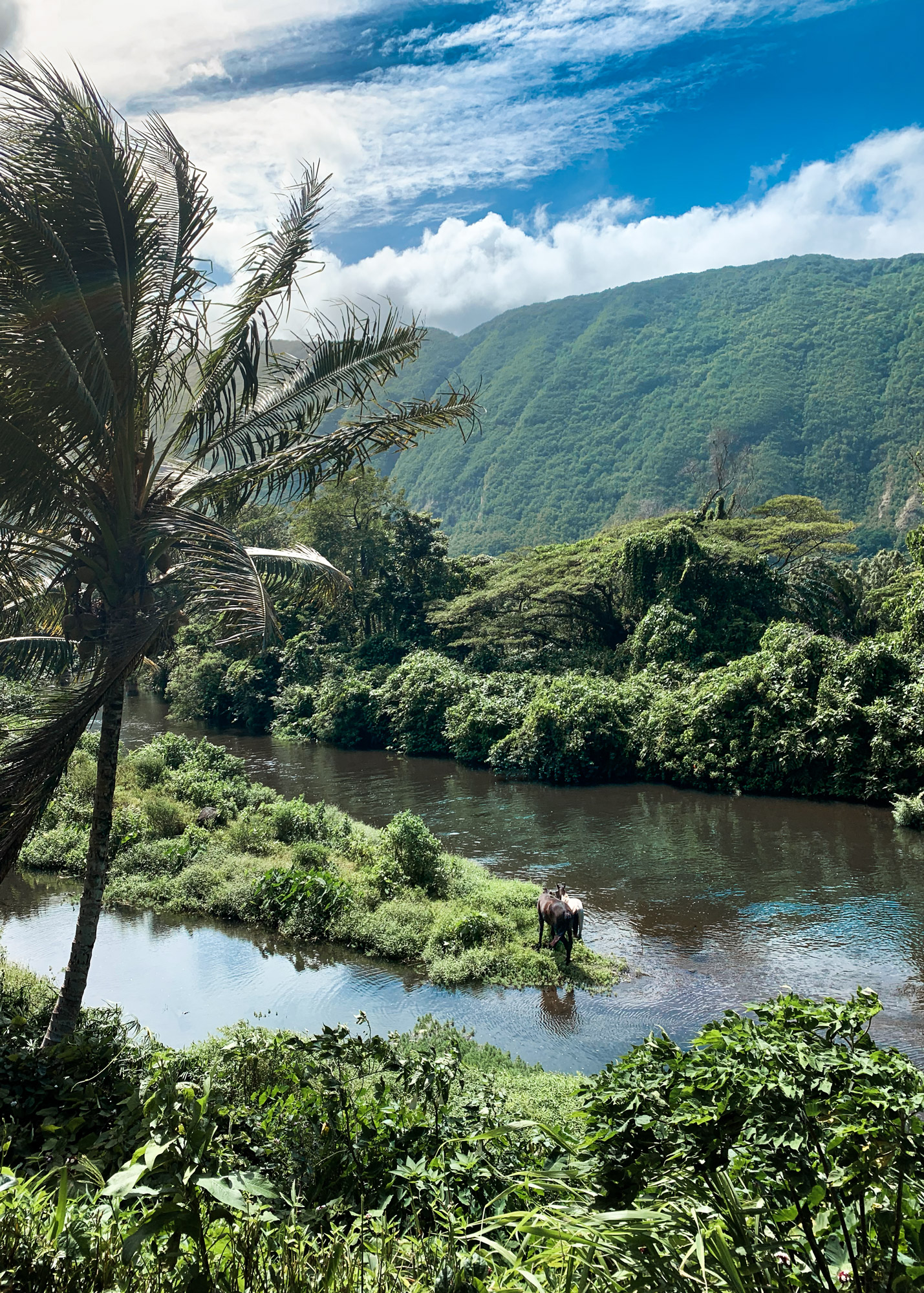
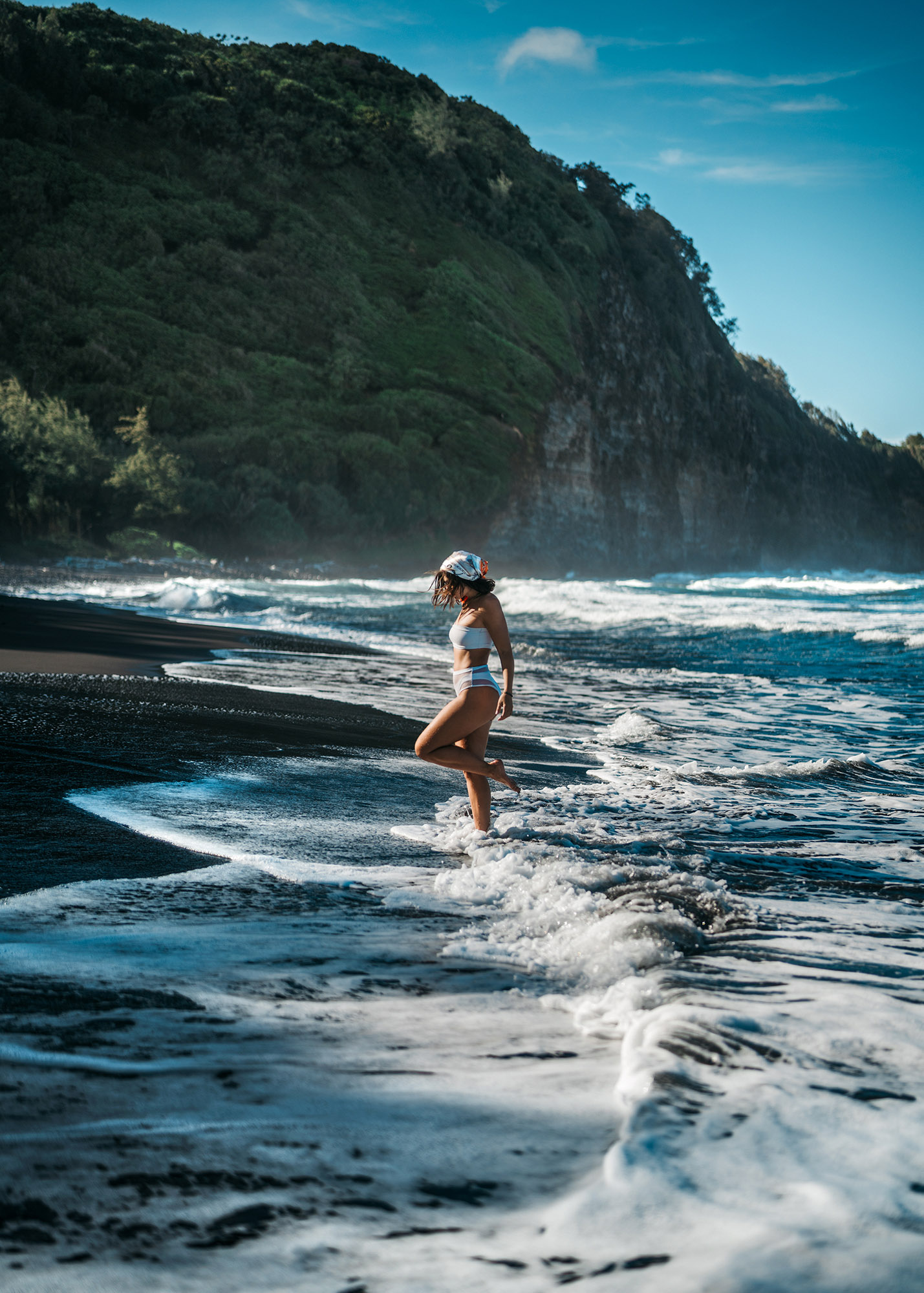
Waipiʻo Black Sand Beach unfolds at the bottom of an expansive valley flanked by steep cliffs that funnel streams toward the shoreline, creating a landscape that feels ancient and immense. The descent and ascent to and from the beach are significant physical undertakings, but the sense of scale and quiet at the valley floor is profound and generative of lingering impressions long after departure. Swimming here requires awareness of strong surf and river entry points, which can shift with weather and tide.
- Parking: Overlook parking at the top of the valley
- How to reach: Steep trail or four-wheel-drive road down to the beach
- Ocean conditions: Rough and unpredictable surf
- Known for: Dramatic valley setting and sweeping black sand
- Hazards: Flash flooding, steep access, and strong currents
11. Waialea Beach (Beach 69)

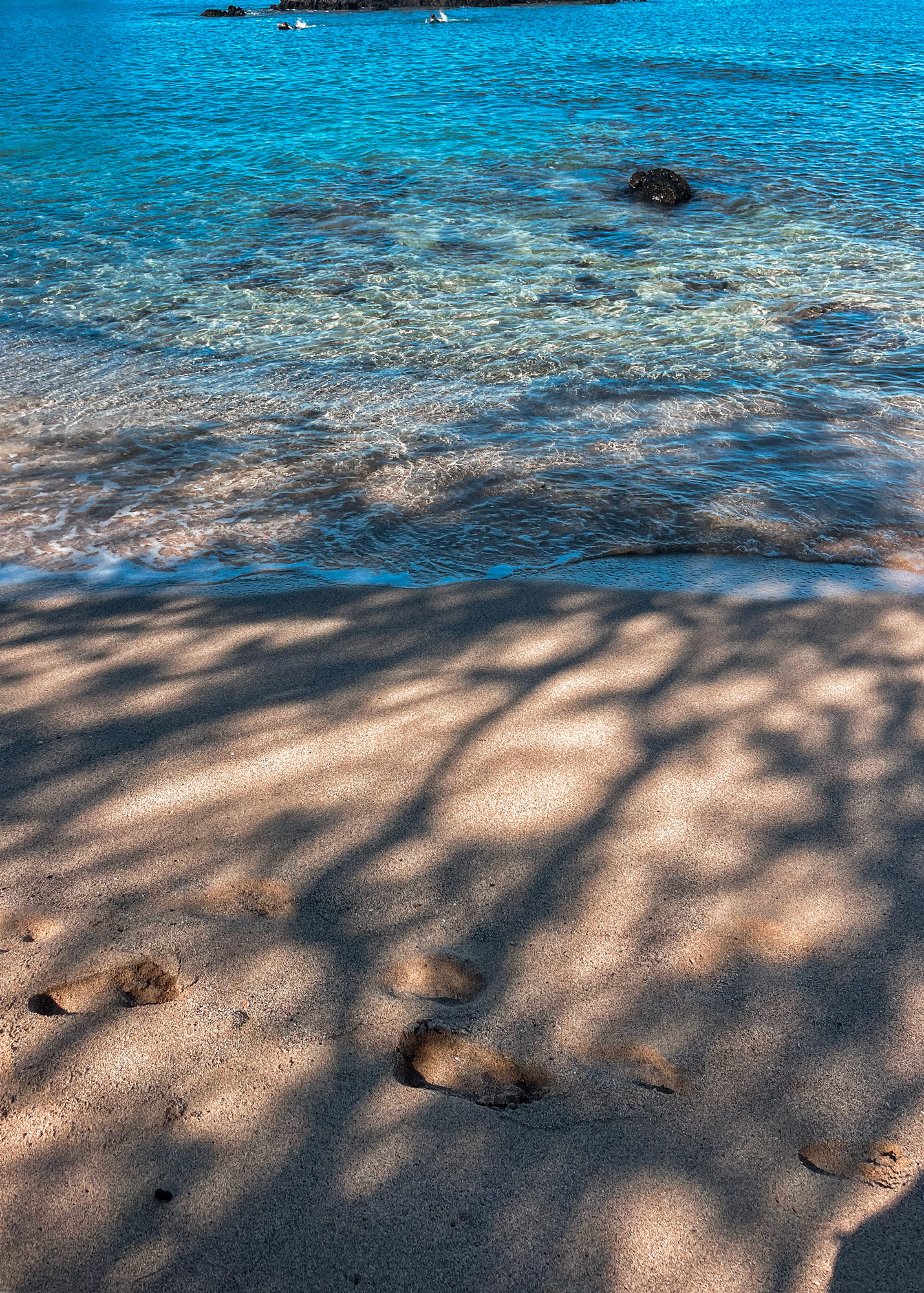
Waialea Beach, often referred to by locals as Beach 69 due to its old utility pole marker, is one of the most approachable and balanced beaches on the Kohala Coast, offering a rare combination of soft white sand, reliable swimming conditions, and a relaxed atmosphere that feels intentionally understated. The crescent-shaped shoreline is framed by kiawe trees that provide consistent shade throughout the day, making it an easy place to linger longer than planned, especially if you value comfort alongside scenery. Offshore, the reef structure creates generally calm waters during summer months, while winter swells can add texture and movement without completely overwhelming the shoreline. This is a beach that works equally well for unstructured beach days, casual snorkeling, and unhurried sunset watching, without the resort density found farther south.
- Location - South Kohala Coast, between Puako and Hapuna, accessed via Waialea Road off Highway 19
- Parking - Small public dirt lot near the beach entrance, free but fills quickly on weekends and mid afternoons
- Fees and permits - No entrance or parking fees required
- How to reach - Short walk from the parking area down a sandy path, with no hiking required
- Swimming conditions - Generally calm in summer with good visibility, while winter surf can be stronger and less predictable
- Snorkeling - Best along the rocky edges at both ends of the beach, particularly during calm mornings
- Hazards - Occasional shore break, seasonal currents, and limited lifeguard presence
- Known for - Easy access, shaded areas, swimmable conditions, and a quieter alternative to nearby Hapuna Beach
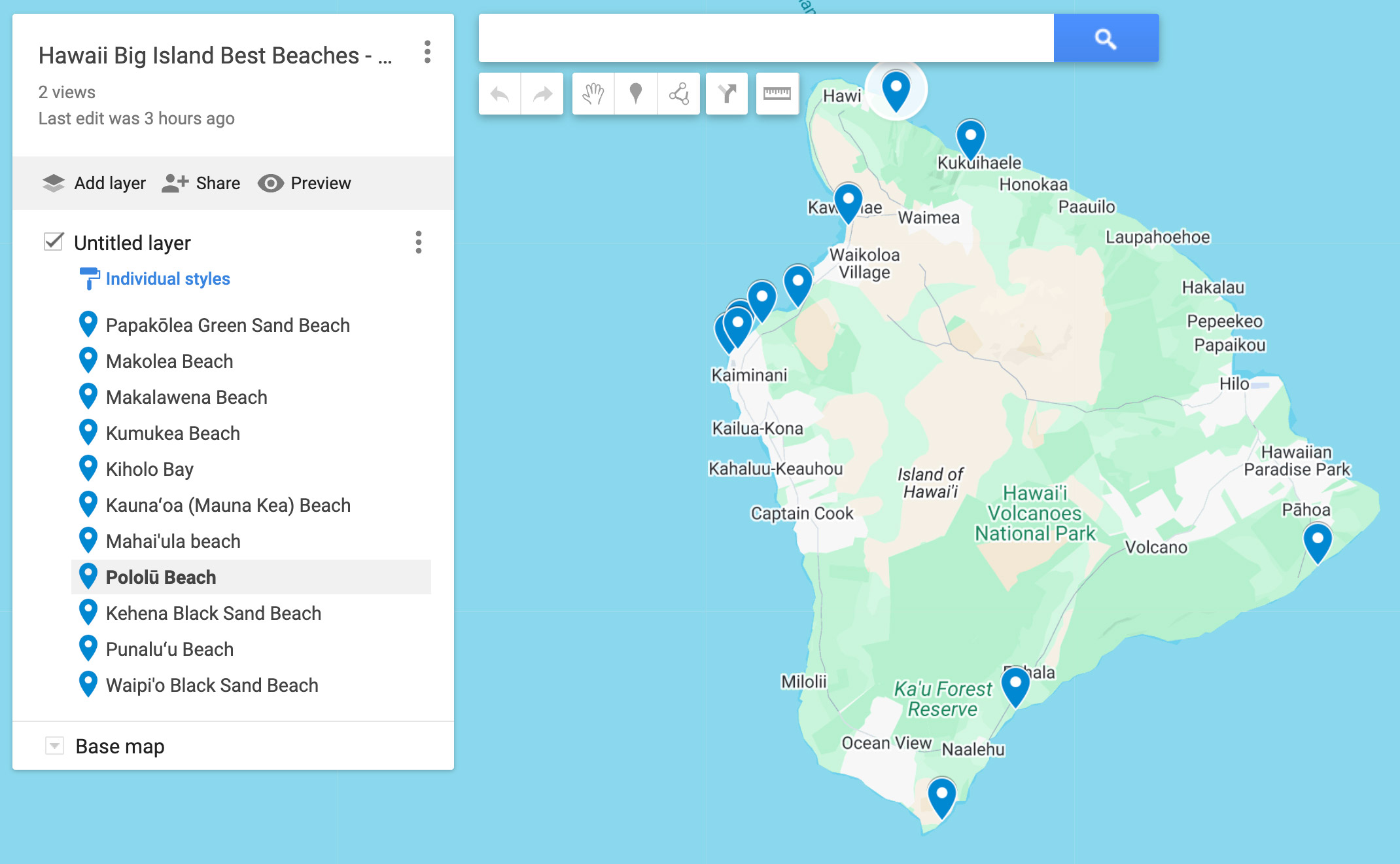
Download The Google Map Of With All Exact Locations Here!
Like this post? Pin it for later and share it with others!
%201.png)
%202.png)
x