
Key Takeaways
- New South Wales has coast, mountains, bush and outback within a few hours, so the right van depends on the trips you really take.
- Check your tow vehicle's limits first, then compare layouts, build quality and the van's real loaded weight.
- Confirm paperwork, registration and any money owing before you pay, particularly on used vans.
- Look at servicing, parts and support, since good aftercare protects your investment.
Introduction
New South Wales is a generous state for a caravan owner. A Friday afternoon can end on a beach on the Mid North Coast, among vines in the Hunter or beside a cold river in the Snowy Mountains. The choice of destinations is huge, and so is the choice of vans.
This guide sets out what to check before you buy from the many caravans for sale in NSW. It covers towing limits, build quality, weight, paperwork, regional conditions, storage and aftercare, with a short checklist for inspecting a van so you can shop calmly and avoid expensive mistakes.
Start with how you will travel
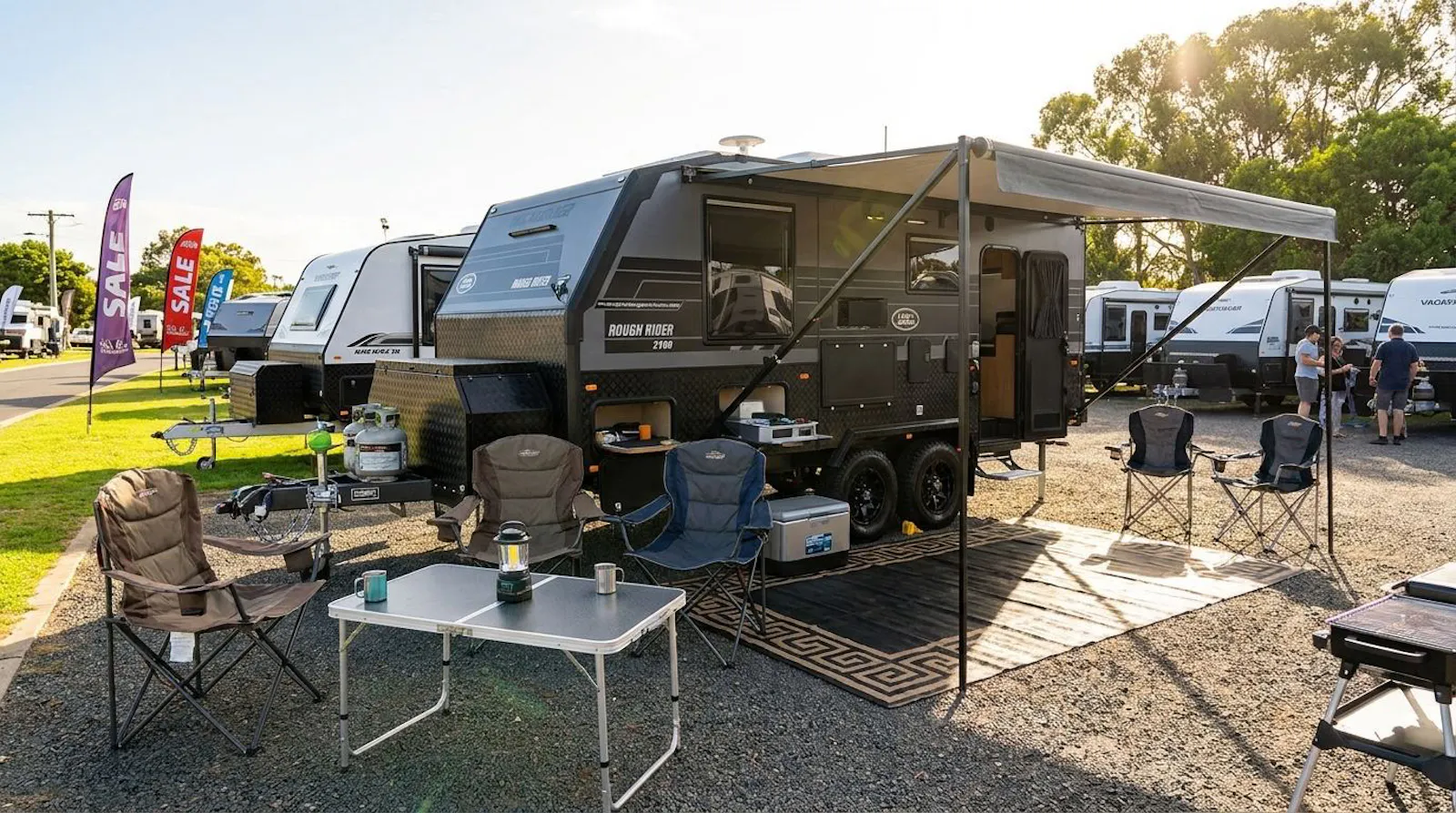
Scanning caravans for sale in NSW, you will see everything from compact weekenders to large family tourers and heavy-duty off-road models. A clear picture of your travel plans narrows that field quickly.
Think about the places you want to see. Coastal holiday parks suit a standard touring van, while the high country, the Barrington Tops and the north west plains include gravel, steep climbs and remote camps. Outback trips toward Broken Hill and the Darling River demand stronger suspension, larger tanks and extra battery capacity.
Think about the people too. A couple on short trips needs a different van from a family of five heading away every school holiday. Decide how many beds you need, how long trips will last and whether you want to be self-sufficient.
Check your tow vehicle first
The tow vehicle sets the limits for everything else.
Find the towing capacity, gross vehicle mass and tow ball limit, and write them down. Add the weight of passengers, fuel, luggage and accessories, because these reduce what you can safely tow. Compare the total with the van's loaded weight, not just its empty weight.
Ask the seller to confirm that the combination is safe and legal. If the numbers are tight, look at a lighter van or a vehicle upgrade. A van that sways or overloads the vehicle is dangerous, particularly on steep descents in the mountains.
Check the van's weight and payload
Weight figures are easy to misread.
Ask for the empty weight, the maximum weight and the payload, and check how much weight you can add before reaching the limit. Water, gas, food, bedding, tools and outdoor gear add up fast, and a large water tank is heavy when full.
Look at the tow ball weight. A van that is too heavy or too light at the front can handle poorly. A well-designed layout keeps heavy items near the axle and balances the load.
Check build quality
Roads in New South Wales range from smooth highways to rough tracks, so build quality matters.
Look at the chassis, the coupling and the suspension. A solid, well-welded frame and quality components suggest care in manufacture. Check the walls, roof and floor for signs of water damage, such as soft spots, stains or musty smells.
Open and close every door, window, hatch and drawer. Good seals keep dust and water out, and neat fittings suggest careful assembly. Check the wiring, the gas lines and the plumbing, and ask about the quality of the batteries, solar panels and appliances.
Check the layout and living space
A van should feel comfortable on a wet day.
Walk through the van and imagine living in it. Sit at the table, lie on the bed, use the kitchen and open the cupboards. Check headroom, bench space, storage and the bathroom. Make sure everyone who will travel fits and has somewhere to sit.
Think about the bed position and the way the space flows. A front bed often leaves a large living area, while a rear bed can feel private and quiet. Bunks suit families, though they can take up storage.
Check the power and water systems. Find out how long the batteries and tanks last, and what is needed to stay off the grid.
Check the paperwork
Paperwork protects you, so read it carefully.
For a new van, check the compliance plate and the details on the contract. Make sure the model, options and delivery date match what you agreed. Keep a copy of every document, including the warranty terms.
For a used van, ask for the registration details, the service history and proof of ownership. Check that there is no money owing and that the identification numbers match the paperwork. Ask about any accidents, repairs or modifications.
Check the current registration rules with the New South Wales transport authority. Requirements can depend on the weight of the van, and they can change. Ask the seller what is included in the price, such as registration, delivery and a pre-delivery inspection.
Check the total cost of caravans for sale in NSW
The sticker price is only part of the story.
Ask for a written quote that lists the van, any extras and every on-road cost. Add insurance, registration, accessories and the cost of storing the van. Consider the cost of servicing, tires, gas and campsite fees over the years.
Compare finance carefully if you need it. Look at the interest rate, the term and any fees, and be cautious about pressure to sign quickly. If you are trading in a van or vehicle, get the valuation in writing.
Check regional conditions
Any van chosen from the caravans for sale in NSW must cope with a state of very different conditions.
The coast is humid and salty, so corrosion and mold are the main concerns. Wash the van after trips, and keep it ventilated. The high country is cold, so insulation and heating matter, and the roads can be steep and winding. The west and outback are hot and dusty, so air conditioning, dust sealing and water capacity are important.
Fire season brings restrictions in many areas. Check fire danger ratings before you travel, and follow the rules on gas cooking and campfires. Floods can also close roads, so keep an eye on local alerts.
Check storage
A van needs a home between trips.
Check whether you can park it at your property, and whether your council or body corporate allows it. Measure the width of your driveway and the turning space. If you need storage, look at secure yards and sheds, and compare the cost.
Check aftercare and support
Aftercare often decides how happy you are with the van.
Ask who handles servicing, warranty claims and spare parts. Find out whether repairs are done locally, how long they take and what support exists if something fails on the road. Ask for a full handover, with a walk-through of every system.
Read reviews and speak to owners. Their experience after the sale shows how a seller behaves when something goes wrong.
Mistakes to avoid
The most common mistake is buying before checking your tow vehicle. Do the numbers first.
Another is rushing. Visit several sellers, compare vans and take time to decide.
Making your choice
Start with the trips you want to take, then check your tow vehicle, the van's weight and its build quality. Read the paperwork, work out the total cost and think about regional conditions and storage. Look closely at aftercare. A careful, patient approach helps you find a van that suits New South Wales and the way you travel.
Frequently asked questions
What should I check before buying a caravan in NSW?
Check your tow vehicle's limits, the van's weight and build quality, the paperwork, the total cost and the aftercare.
How do I check a used caravan?
Ask for the service history, inspect for water damage and rust, confirm no money is owing and consider an independent inspection.
Do I need to register a caravan in NSW?
Yes, caravans must be registered. Check the current requirements with the New South Wales Transport Authority.