You've worked hard on your garden. You planned it out, planted everything, kept it watered, and waited patiently. Then one morning, you step outside to find dug-up soil, smashed seedlings, and undeniable proof that some neighborhood cat has turned your flower bed into its personal toilet. Frustrating? Luckily, there are some smart, tried-and-true ways to keep cats away from your garden.
Why Cats Keep Showing Up in Your Garden
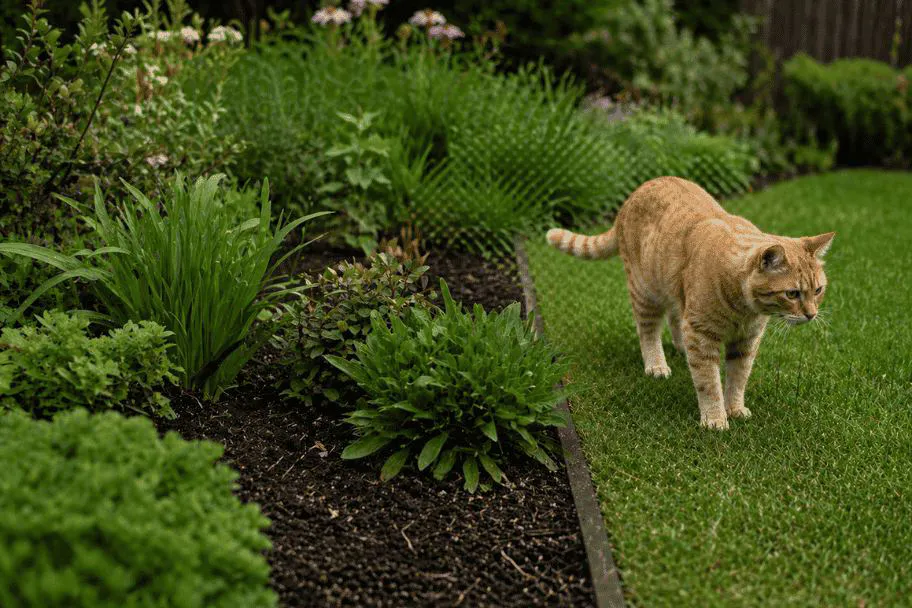
Before reaching for a solution, it helps to understand what's drawing cats in the first place. Cats are territorial and habitual. Once they've identified a spot as safe and comfortable, they'll return to it consistently. Your garden checks a lot of their boxes:
- Loose, soft soil is irresistible for digging and using as a bathroom
- Sheltered spots under shrubs or along fences offer a sense of security
- Bird feeders and wildlife give them something to hunt or stalk
- Warm, sunny patches are perfect for lounging
Physical Deterrents to Repel Cats From Your Garden
Sometimes the most effective way to keep cats out of your garden is to make the space physically unwelcoming, and that's exactly what this category of tools does.
Ultrasonic Cat Repellent
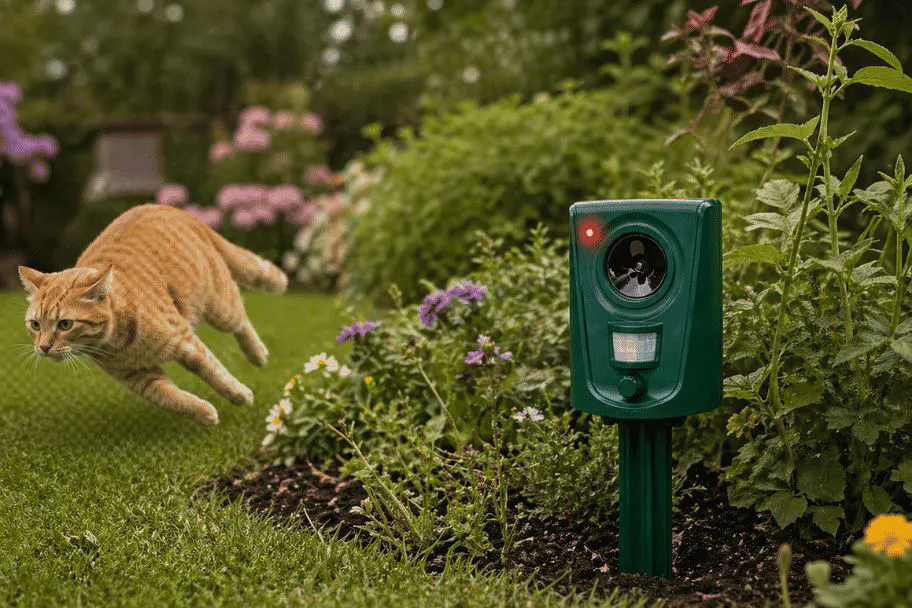
If you want something that works around the clock with zero maintenance, ultrasonic cat deterrents are worth serious consideration. A good example of this product is ZeroCat from Sonic Barrier. Cats can hear frequencies up to 60 kHz, far beyond the human limit of 20 kHz. Their cochlear structure makes them acutely sensitive to high-pitched sounds that are completely silent to us. When a motion-activated device emits those frequencies, cats perceive them as intensely unpleasant and quickly leave the area. By aligning with cats' peak sensitivity, ZeroCat provides a scientifically grounded, non-invasive deterrent.
Motion-Activated Water
Cats famously dislike getting wet. A motion-activated sprinkler connects to your garden hose and delivers a short, startling burst of water whenever it detects movement. It's harmless, effective, and has the added benefit of watering your garden at the same time. The one limitation is that sprinklers require a water connection and need to be positioned carefully to avoid soaking garden paths or patio areas you actually use. They're most practical for larger open beds where coverage is straightforward.
Cat Scat Mats
Scat mats are plastic mats lined with blunt spikes that sit flush on the soil surface. Harmless to the touch, but unpleasant enough under paw that cats quickly decide your garden bed isn't worth the effort. They're ideal for raised beds, pots, and high-traffic digging spots, can be cut to any shape, and need zero maintenance once laid down. Plants grow through them without any issue.
Use Scent-Based Deterrents To Repel Cats From Your Garden

Cats have an extraordinarily refined sense of smell, and there are several scents they genuinely dislike. Using this is one of the easiest, chemical-free ways to keep cats out of your garden.
Some of the most effective options include:
[["Deterrent","How to Use","Refresh Frequency"],["Citrus peels (orange, lemon, grapefruit)","Scatter around garden beds and near entry points","Every 2 - 3 days, or after rain"],["Coffee grounds","Mix into the top layer of soil","Weekly"],["Lavender, rue, pennyroyal","Plant along garden borders","No maintenance once established"],["White vinegar","Spray along fences, pathways, and access points","Every 3 - 4 days, or after rain"],["Cinnamon or cayenne pepper","Sprinkle lightly across soil surfaces","Every few days, more often in wet weather"]]
The key with scent deterrents is consistency. They need to be refreshed regularly, especially after rain, to stay effective.
Plants That Naturally Keep Cats Away From Your Garden
One of the most elegant solutions is also the most permanent: letting your garden do the work for you. Several plants are well-documented cat repellents, and incorporating them into your existing layout means you're building a living, self-sustaining barrier that looks great and requires almost no upkeep once established.
- Rue (Ruta graveolens) is widely considered the most effective cat-repelling plant. Its pungent, bitter scent is something cats find deeply off-putting. It's a hardy perennial that thrives in most US climates and produces small yellow flowers. Worth noting: wear gloves when handling it, as the sap can irritate skin.
- Lavender does double duty. It's beloved by humans and pollinators alike, while cats consistently avoid it. Plant it along borders or at garden entry points for both beauty and function.
- Coleus canina, sometimes sold under the name "Scaredy Cat Plant," was specifically cultivated as a feline deterrent. Its smell is unpleasant to cats (and, honestly, not great for humans either at close range), but it's effective when planted in clusters.
- Pennyroyal is a low-growing member of the mint family with a sharp, medicinal scent cats dislike. It spreads readily, making it a good ground cover option for larger exposed areas.
- Thorny shrubs like roses, hawthorn, or barberry along the garden perimeter create a physical and sensory barrier in one. Cats are unlikely to push through anything that pokes back.
Other Methods to Repel Cats From Your Garden
Make Your Soil Less Inviting To Cats
Here's a trick most people overlook: change the texture of your garden beds. Cats are drawn to soft, loose soil because it's easy to dig into. Here's how you can make your soil less inviting for cats :
- Lay chicken wire or plastic mesh just below the surface of your soil. Plants grow through it just fine, but cats find the texture under their paws off-putting.
- Place pine cones, stone mulch, or rough bark across exposed soil. The uneven, sharp-edged texture is something cats actively avoid.
- Push wooden skewers or chopsticks into the ground at regular intervals across beds. It looks slightly odd for a few weeks, but it's remarkably effective and completely harmless.
- Use prickly ground cover plants like roses or holly along borders. Cats won't willingly walk through anything that scratches.
These physical barriers work particularly well in combination with scent or ultrasonic methods, creating multiple layers of discouragement.
Cut Off Food and Shelter Sources
Cats are opportunists. If your garden provides food, water, or comfortable hiding spots, they'll keep showing up regardless of what deterrents you use. Removing those incentives is a foundational step.
- Bring in bird feeders at night or switch to models that are harder for cats to access
- Secure compost bins tightly so they don't attract rodents, which in turn attract cats
- Remove dense brush piles or gaps under decking that cats use as sheltered resting spots
- Don't leave pet food outside, even briefly. It signals to outdoor cats that your property is a reliable source of resources.
This approach won't deter the most determined visitors on its own, but it significantly reduces how frequently cats are drawn to your garden in the first place.
Plant a Cat-Friendly Zone
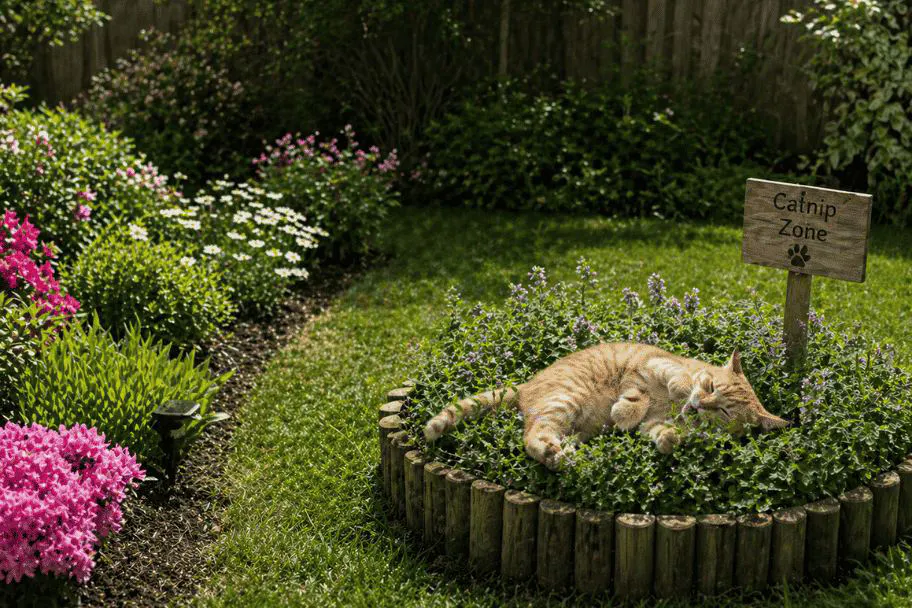
This one requires a slightly different mindset: rather than purely repelling cats from your whole garden, consider redirecting them. Catnip and valerian are plants cats are powerfully drawn to. Planting a small dedicated patch in a corner of your yard away from your flower beds can pull their attention toward an area where you don't mind their presence. It won't work for every cat, and it requires a bit of planning, but for homeowners dealing with the same few neighborhood regulars, it can be a surprisingly effective long-term strategy.
Our Tips to Repel Cats Effectively From Your Garden
Honestly, the most effective cat deterrent strategy isn't a single solution. It's layering several complementary methods together. Use scent deterrents to discourage entry, physical textures to make beds uncomfortable, an ultrasonic device for consistent overnight and all-day coverage, and habitat modifications to remove what's drawing cats in. Each layer reinforces the others, and cats that push through one barrier are far more likely to give up when they encounter two or three more.
With the right combination in place, most gardens see a dramatic reduction in cat activity within days, sometimes sooner.
FAQ
What is the best way to repel cats from your garden?
The most reliable approach is to combine several methods at once. No single deterrent works for every cat, but layering scent repellents, physical barriers, and a motion-activated device like an ultrasonic repellent covers all your bases. Cats that push past one obstacle are far more likely to turn back when they encounter a second or third.
What is the most effective cat repellent for a garden?
For consistent, low-maintenance protection, ultrasonic repellents are hard to beat. They activate automatically, work day and night, and trigger an instinctive response in cats rather than a learned one - which means they stay effective long-term. The ZeroCat Repellent is a strong option, covering a 30-foot range at 110 degrees with up to 6 months of battery life.
Do ultrasonic cat repellents affect other animals or pets?
Devices specifically calibrated for cats, like ZeroCat, use frequencies that target feline hearing sensitivity. That said, other animals with similar hearing ranges, including dogs, may respond to them. Check the product specs if you have outdoor pets you want to protect.
Do cats eventually get used to ultrasonic deterrents?
Well-designed devices use variable frequencies or are motion-triggered rather than constant, which prevents cats from habituating to the sound. Consistency of placement matters too. Moving the device occasionally can help maintain its effectiveness.
What's the best cat deterrent for a large garden?
For bigger spaces, a combination of perimeter planting (lavender, rue), multiple ultrasonic devices placed at key entry points, and motion-activated sprinklers tends to give the most comprehensive coverage.
Is it legal to deter neighbor cats from my garden?
In the US, using humane deterrents on your own property is completely legal. You cannot trap or harm cats without local ordinance permission, but there are no restrictions on non-harmful deterrent methods applied within your own yard.