That assumption falls apart the moment you land feeling parched, exhausted, and vaguely unwell after what should have been a routine flight. The cabin environment is a carefully engineered compromise between passenger comfort and aircraft safety, but the trade-offs come with physical consequences that airlines rarely discuss in detail.
Understanding what happens to your body in that pressurized aluminum tube matters more than you might think. The air you breathe during a flight is fundamentally different from ground-level air in ways that affect your skin, respiratory system, energy levels, and overall comfort.
The Desert in the Sky
The World Health Organization reports that humidity in airplane cabins is usually less than 20 percent, while
Related reading: 10 Realistic Ways to Stay Fit and Healthy While Traveling
the Environmental Protection Agency recommends that houses be kept between 30 and 50 percent humidity.
Airplane cabins maintain just 10 to 20 percent humidity, making them drier than the Sahara Desert which sits at 25 percent.
Airplanes have such dry cabin air because they use bleed air pulled from the engines, which is naturally dry and contains very little moisture content.
The plane intakes outside air which at an altitude of 35,000 feet has less than 1 percent humidity. That extreme dryness has direct physiological effects that unfold over hours.
Low humidity in the cabin dehydrates passengers and crew, including the sinuses and mucous membranes, which play a crucial role in protecting against airborne diseases.
The low-humidity air you breathe in a plane dries out the mucus membranes of your mouth and nose, which can affect your sense of taste. Skin loses moisture rapidly in this environment, and the discomfort compounds the longer you remain airborne.
What Your Skin Faces During Flight

The combination of low humidity and recirculated air creates conditions that strip moisture from exposed skin faster than most daily environments. Frequent travelers often notice tightness, flaking, and accelerated signs of aging that correlate directly with time spent in the air. This is not coincidental.
Bringing hydration-focused products becomes essential rather than optional. Compact options designed for fluctuating climates work well in these situations. A travel skincare set typically includes cleansers and moisturizers in TSA-compliant sizes that fit easily into carry-on luggage.
Travel-size skincare kits can help renew dehydrated skin caused by air travel.
Beyond topical solutions, internal hydration matters just as much. Drinking water consistently throughout the flight helps counteract the moisture loss, though the low humidity means your body will lose water faster than it would on the ground.
Pressure Changes and Oxygen Levels
Air pressure is lower at higher altitudes which means your body takes in less oxygen, and airlines pressurize the air in the cabin but not to sea-level pressures so there is still less oxygen getting to your body when you fly.
Post-flight fatigue is caused by a combination of factors including mild hypoxia with a 3 to 4 percent reduction in blood oxygen saturation at cabin altitude.
Cabin pressure changes still affect the human body with common effects including ear barotrauma during takeoff and landing, changes in blood oxygen levels which can cause fatigue or mild headaches, and general discomfort for passengers with respiratory or cardiovascular conditions.
The body adapts to these changes, but the adjustment process contributes to the overall feeling of exhaustion many passengers experience.
The Boeing 787 Dreamliner's composite fuselage allows a cabin altitude of approximately 6,000 feet at cruise compared to 7,000 to 8,000 feet on older types, and passengers consistently report feeling less fatigued largely due to this lower cabin altitude and higher humidity of 15 to 20 percent versus 6 to 10 percent.
Newer aircraft models are beginning to address these issues, but the majority of commercial flights still operate with older environmental control systems.
The Filtration System You Never See

Most U.S. commercial airplanes use High Efficiency Particulate Air HEPA filters which remove 99.97 percent of particulate measuring 0.3 micrometers or greater in diameter.
About 40 percent of a cabin's air gets filtered through this HEPA system while the remaining 60 percent is fresh and piped in from outside the plane, and cabin air is completely changed every three minutes on average while the aircraft is cruising.
HEPA filters trap over 99.9 percent of airborne particles and other bio-contaminants as small as 0.3 microns. Despite concerns about airborne illness transmission, the filtration systems on modern aircraft are remarkably effective. Air quality standards set by federal agencies help ensure that recirculated air meets safety benchmarks.
The vertical airflow pattern in most cabins also limits cross-contamination between rows.
A 2018 study examined the transmission of droplet-mediated respiratory illnesses during transcontinental flights and found that an infectious passenger with influenza was unlikely to infect passengers seated farther away than two seats on either side or one row in front or in back. The combination of rapid air exchange and hospital-grade filtration makes cabin air cleaner than many assume, even if it does not feel that way.
For travelers interested in optimizing their packing strategy, efficient luggage organization can reduce stress and ensure essential comfort items remain accessible throughout the journey.
The Reality of Recirculated Air
The term "recirculated air" carries negative associations, but the engineering behind cabin air systems is more sophisticated than most passengers realize. Fresh air constantly enters the system, mixes with filtered recirculated air, and exits through floor-level vents. The entire volume of air in the cabin is replaced multiple times per hour, a rate that exceeds most office buildings and homes.
Research on cabin pressure effects conducted by federal aviation authorities continues to inform design standards for newer aircraft. Studies on altitude exposure provide data on how reduced oxygen levels impact different passenger populations, particularly those with preexisting respiratory or cardiovascular conditions.
The discomfort you feel on a plane is not imaginary, but it is also not primarily a result of poor air quality in the sense of contamination. The issue lies in the physical properties of that air: its extreme dryness, reduced oxygen content, and the pressure differential your body must accommodate.
What Actually Helps
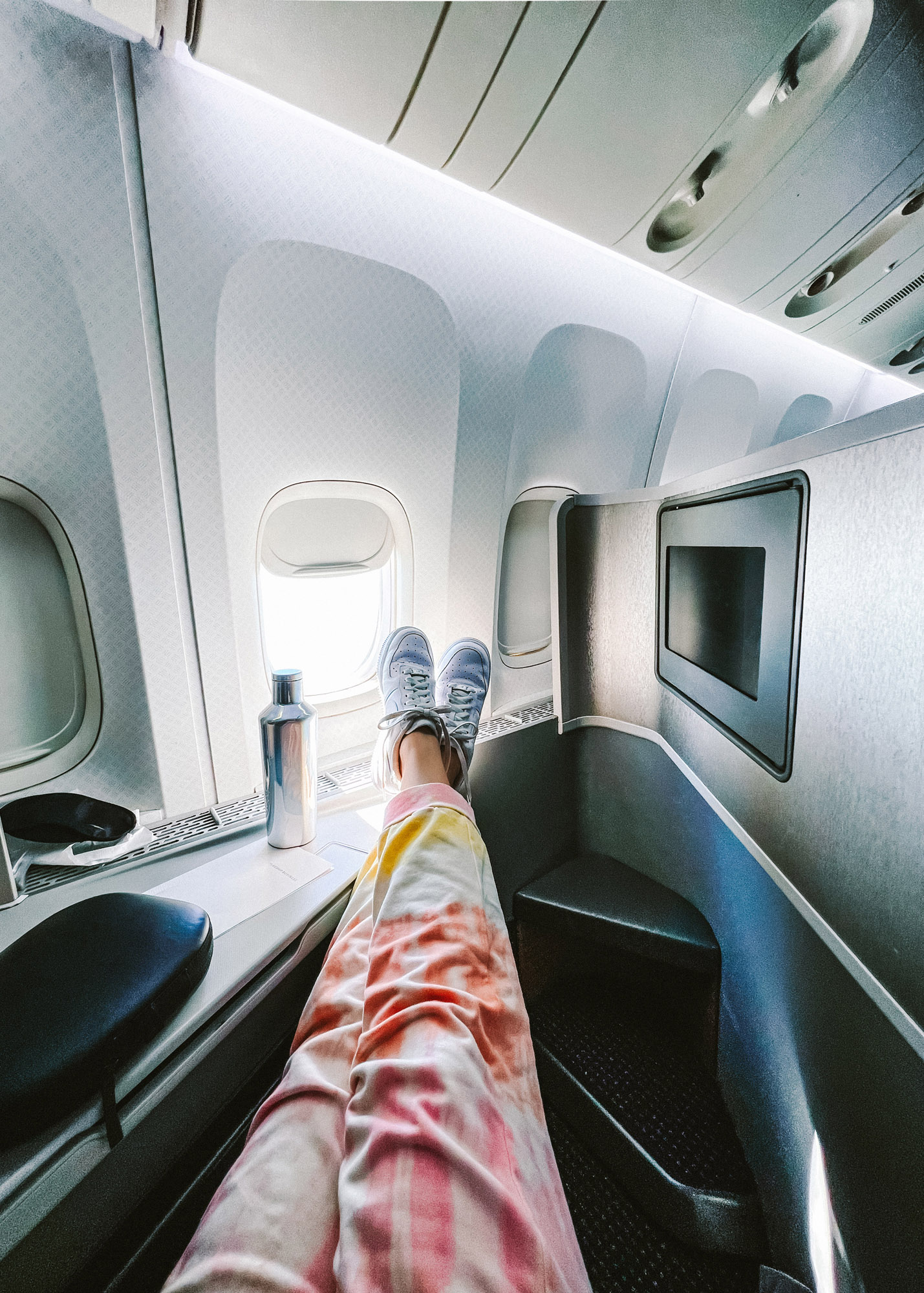
Preparation makes a measurable difference. Hydrating before and during the flight counters moisture loss. Avoiding alcohol and caffeine reduces dehydration. Using saline nasal spray helps keep mucous membranes from drying out completely. Moisturizing products designed for low-humidity environments provide relief for skin.
Data from the World Health Organization on optimal humidity levels reinforces why cabin conditions feel so uncomfortable. Your body is designed to function best in environments with moderate humidity, and airplane cabins fall well outside that range.
The next time you board a flight, you will be breathing air that is drier than most deserts, pressurized to simulate an altitude thousands of feet above sea level, and filtered through systems designed for hospitals. Understanding these realities does not make them disappear, but it does explain why a few hours in a seat can leave you feeling like you spent a day in an unfamiliar climate.
The cabin environment is engineered for safety and efficiency first, and comfort is a secondary consideration that improves slowly with each new generation of aircraft.